
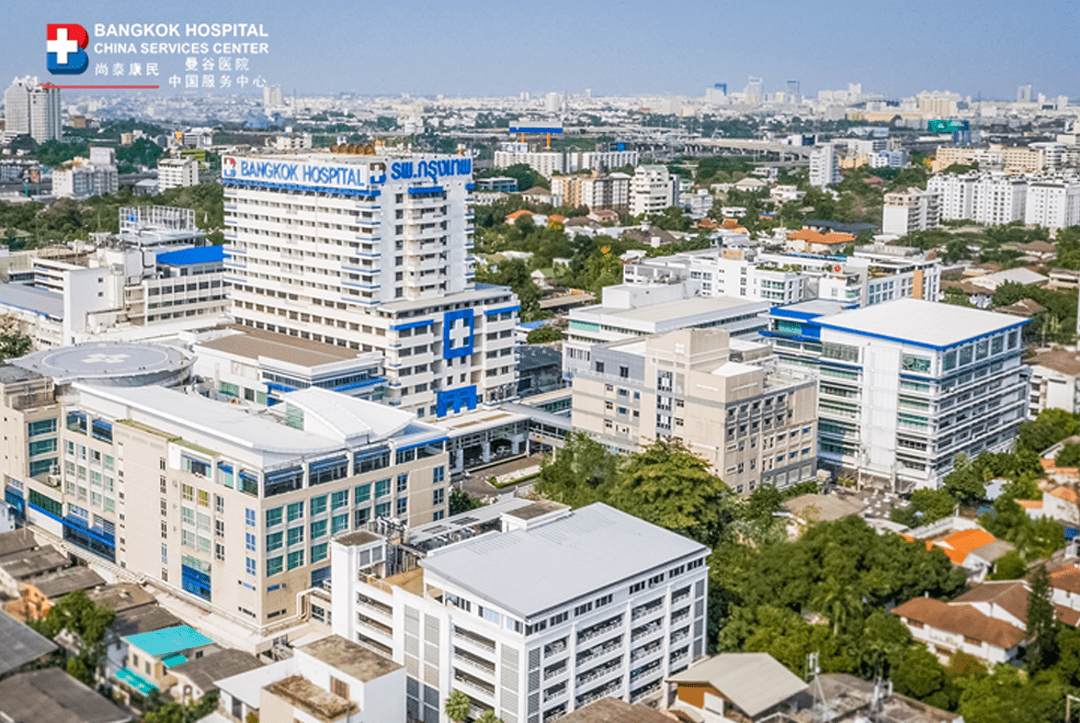
Bangkok Hospital, Thailand
Founded in 1972, Bangkok Hospital is the flagship of BDMS, the largest medical group in Southeast Asia, and serves as the medical hub of Bangkok, Thailand. It was listed on the Stock Exchange of Thailand in 1991 and has been ranked among the top three publicly listed hospitals worldwide by market capitalization. Recognized by MTQVA as one of the world's top ten hospitals, it was awarded the Royal Medal by King Bhumibol Adulyadej for outstanding service to society, making it the only hospital in Thailand permitted to display the national emblem. In 2007, Bangkok Hospital achieved JCI accreditation, ensuring the highest standards of patient care and safety. Today, the hospital is a global leader in cancer, cardiology, IVF, rehabilitation, and many other specialties. Each year, it welcomes hundreds of thousands of international patients from over 160 countries, earning a reputation as a truly international medical destination and a unique healthcare giant in Thailand.
- Our team of highly skilled reproductive endocrinologists and embryologists brings over 15 years of experience and more than 1200 successful births.
- IVF success rates reach as high as 70%.
- We have a state-of-the-art embryology laboratory and modern equipment meeting international cleanroom standards.
- Our andrology lab handles sperm analysis and selection.
- Cutting-edge world-class reproductive technologies
- Preimplantation genetic testing for aneuploidy (PGT-A) screening helps improve pregnancy rates while reducing the risk of miscarriage.
Our Services
- Comprehensive diagnosis of infertility causes. Infertility typically stems from insufficient egg production, blocked fallopian tubes or pelvic adhesions, or low sperm quality in men.
- Targeted treatments for the primary causes of infertility: for example, ovulation induction medications, minimally invasive procedures, or intrauterine insemination. If these initial treatments prove unsuccessful, our specialists may recommend advanced approaches like IVF.
- Couples who marry later in life may be at increased risk of miscarriage or having a baby with intellectual disabilities. For this reason, IVF and ICSI are ideal options for those who marry later or wish to delay family building. They can also discuss egg and sperm freezing with our experts.
- Our gynecologic surgeons and multidisciplinary team use laparoscopy or robot-assisted minimally invasive surgery to treat conditions such as ovarian cysts, endometriosis, chocolate cysts, and pelvic adhesions.

Expertise and Technology
- Intrauterine Insemination (IUI)—This method is suitable for treating infertility in couples without any physiological problems. On the wife's ovulation day, the doctor collects the husband's sperm, selects and cultures healthy sperm, and then injects it into the wife's uterus to increase the chance of conception.
- In Vitro Fertilization (IVF)—This is a convenient procedure that does not require anesthesia or surgery, but its success rate is almost the same as gamete intrafallopian transfer (GIFT). In this process, mature eggs are retrieved through the vagina. These eggs are fertilized with the husband's sperm in the laboratory. The doctor waits until the cells divide into 4-8 cells or reach the blastocyst stage before transferring the resulting embryos into the wife's uterus.
- Intracytoplasmic Sperm Injection (ICSI)—This method is used when the husband's sperm count is too low to fertilize the egg on its own, or when there is a complete absence of sperm but the testicles still produce sperm. In this process, a microneedle carrying sperm is injected into the egg; the egg is then cultured to the blastocyst stage and finally transferred back into the wife's uterus.