
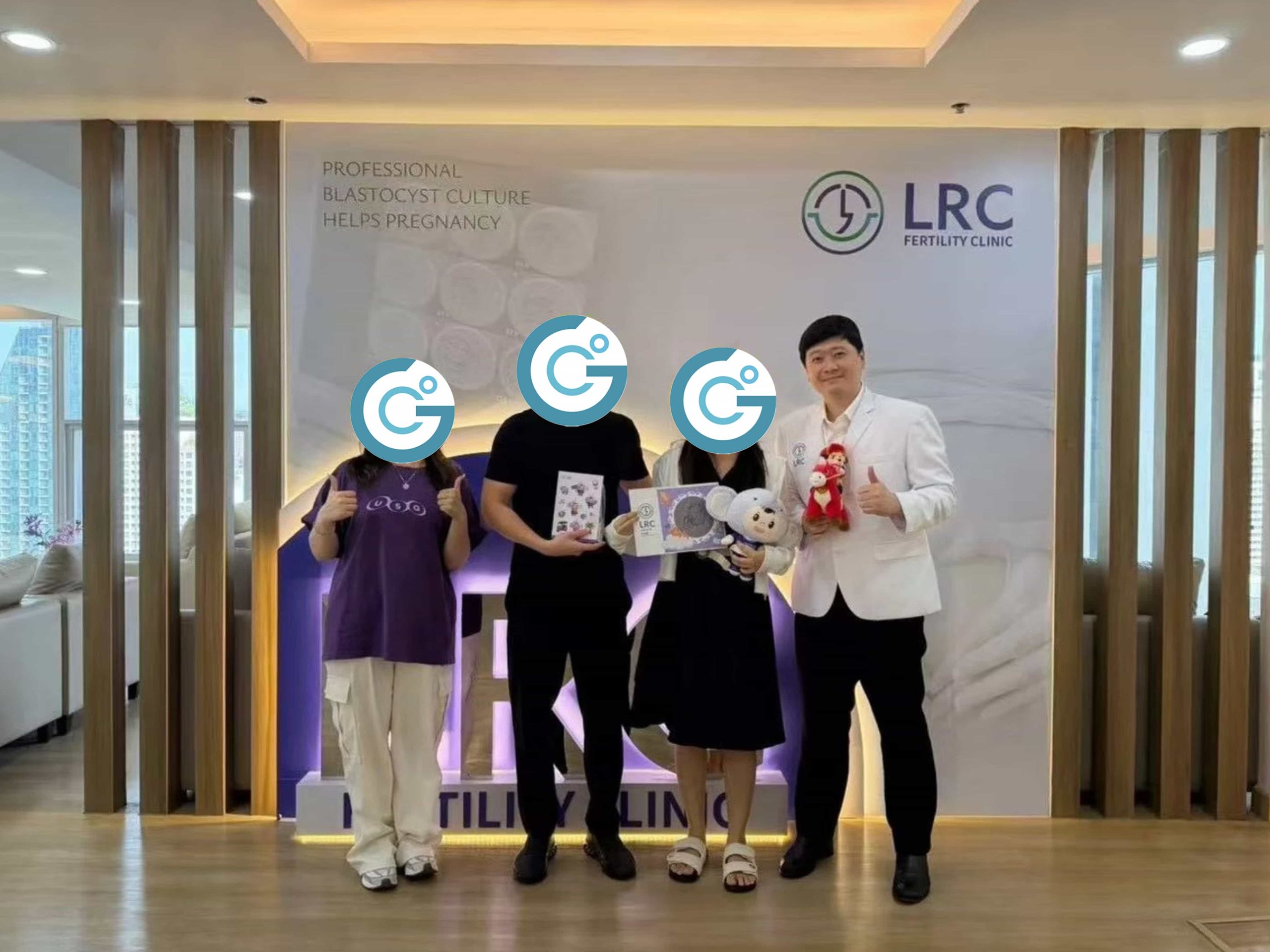
Can IVF Still Be an Option at 47? Diminished Ovarian Reserve with Endometrioma: 3 Eggs Retrieved at LRC Thailand, with 1 Blastocyst Ultimately Obtained
Can IVF Still Be an Option at 47? Diminished Ovarian Reserve with an Ovarian Endometrioma (Chocolate Cyst): 3 Eggs Retrieved at LRC in Thailand and Ultimately 1 Blastocyst Obtained
At 47, with significantly diminished ovarian reserve and an ovarian endometrioma (chocolate cyst), and with the male partner’s sperm motility also being suboptimal, can IVF still produce an embryo under such conditions?
For families trying to conceive at an older age, what worries them most is often not how complex the treatment process is, but that as age increases, the fertility opportunities they can pursue become increasingly limited.
At LRC Reproductive Center in Thailand, a 47-year-old woman faced exactly this situation. Baseline testing showed that she had a small number of recruitable ovarian follicles and elevated follicle-stimulating hormone (FSH), along with an ovarian endometrioma. Her 39-year-old male partner also had insufficient sperm motility.
Facing multiple fertility challenges, the LRC medical team developed an individualized assisted reproduction plan based on the couple’s physical conditions.
Ultimately, in this cycle, 3 eggs were successfully retrieved, of which 2 were mature, 1 fertilized normally, and 1 blastocyst was successfully cultured.
Although this is not yet the endpoint of a successful pregnancy, for a 47-year-old woman with diminished ovarian reserve, every opportunity to obtain an embryo that can be further evaluated is meaningful.
Today, Huanqiu Xinsheng uses this assisted reproduction case from LRC in Thailand to help readers understand how older women can approach diminished ovarian reserve, ovarian endometrioma, and male sperm factors, as well as the key issues worth attention during IVF treatment.
1. Facing Multiple Fertility Challenges at 47: Where Does the IVF Journey Begin?
To protect client privacy, we refer to the female client in this case as Ms. Lin.
When 47-year-old Ms. Lin came to LRC Reproductive Center in Thailand for a fertility assessment, her situation was not optimistic.
From the perspective of age, after women enter their 40s, ovarian reserve usually declines further, and the risk of oocyte chromosomal abnormalities also increases. By age 47, the chance of obtaining an embryo with normal developmental potential using one’s own eggs is usually already very limited.
Ms. Lin also had another issue: an ovarian endometrioma (chocolate cyst).
A chocolate cyst is the common term for an ovarian endometriotic cyst, which is a manifestation of endometriosis. It may be associated with local ovarian inflammation, changes in the follicular microenvironment, and diminished ovarian reserve.
For older women who already have fewer follicles, how to protect ovarian function as much as possible while controlling disease risk is an issue that needs to be carefully considered during treatment.
Ms. Lin’s baseline testing showed:
- Female partner’s age: 47
- Baseline recruitable follicles: approximately 2–3
- Baseline FSH: 12.9 mIU/mL
- Concurrent condition: ovarian endometrioma (chocolate cyst)
- Male partner’s age: 39
- Male partner’s semen profile: low sperm motility
The combination of these factors significantly limited the couple’s chances of natural conception.
However, Ms. Lin still hoped to pursue mature eggs through assisted reproduction and to attempt fertilization and embryo culture.
For her, the most important goal of this treatment was not to pursue a large number of retrieved eggs, but to obtain, as far as possible under limited ovarian response, an embryo with value for subsequent evaluation.
2. Should the Endometrioma Be Treated with Surgery First? The Doctor Made a Key Decision
In IVF treatment, women with an ovarian endometrioma often face a question: should the cyst be treated first, or should they proceed directly to an ovarian stimulation cycle?
In fact, not all patients with an ovarian endometrioma need surgery first.
For some patients, cyst surgery may relieve pain or address other clinical issues, but surgery may also damage normal ovarian tissue and further affect ovarian reserve.
Especially for Ms. Lin, who is 47 and already has a small number of baseline follicles, both treatment time and remaining ovarian function needed to be carefully weighed.
After assessment, Dr. Songbao, Director of LRC Reproductive Center in Thailand, considered her age, ovarian condition, and treatment goals and decided not to perform cyst surgery in this cycle, but instead to start ovarian stimulation as soon as possible.
The core of this decision was to avoid unnecessary loss of ovarian function, while fully considering the relevant risks, and to pursue the limited opportunity to retrieve eggs at this stage.
Of course, this does not mean that all patients with an ovarian endometrioma are suitable for proceeding directly to stimulation.
If the cyst is large, pain is significant, there are suspicious malignant features, or the cyst affects the egg retrieval procedure, the doctor may still recommend further examination or treatment.
Therefore, whether the cyst should be treated first must be determined through comprehensive assessment based on the patient’s age, ovarian reserve, cyst characteristics, and specific clinical situation.
3. From 2–3 Baseline Follicles to 3 Eggs Retrieved: How Was the Stimulation Process Carried Out?
After determining the treatment direction, the LRC medical team developed an individualized ovarian stimulation protocol for Ms. Lin.
For older patients with diminished ovarian reserve, ovarian stimulation is not simply a matter of increasing medication dosage; it also requires ultrasound and hormone monitoring to understand the ovary’s actual response to medication.
Ms. Lin’s treatment records clearly show this process.
Day 1 of Stimulation: Limited Number of Antral Follicles
On day 2 of her menstrual cycle, Ms. Lin underwent baseline transvaginal ultrasound and hormone testing.
Ultrasound showed 2 follicles in the right ovary, approximately 10 mm and 6 mm in diameter, respectively; 1 follicle of approximately 3 mm was seen in the left ovary.
The main hormone results on that day were:
- FSH: 12.9 mIU/mL
- LH: 7.33 mIU/mL
- Estradiol (E2): 32.7 pg/mL
- Prolactin: 11.8 ng/mL
Based on the test results, the number of follicles that could be recruited in this cycle was small, and there was already some variation in follicle size.
This meant that the doctor needed not only to monitor whether the follicles would continue to grow, but also to assess the maturation timing of different follicles comprehensively.
Day 4 of Stimulation: Follicles Begin to Show Growth Changes
After several days of stimulation, ultrasound showed that the right-side follicles had reached 13 mm and 9 mm, and follicles of approximately 5 mm and 4 mm were seen on the left.
LH on that day was 3.88 mIU/mL.
It could be seen that some follicles had begun to grow, but there were still obvious developmental differences among the follicles.
For women with diminished ovarian reserve, this situation is not uncommon. The doctor needs to base subsequent treatment arrangements on changes across the entire follicle cohort, rather than solely on the diameter of the largest follicle.
Days 7 to 9 of Stimulation: Ongoing Monitoring to Pursue the Chance of Mature Eggs
On day 7 of stimulation, the right-side follicles were approximately 17 mm and 12 mm, and the left-side follicles were approximately 8 mm and 7 mm.
On that day, estradiol rose to 172 pg/mL, and endometrial thickness was approximately 6.0 mm.
By day 9 of stimulation, the right-side follicles were still recorded as 17 mm and 12 mm, the left-side follicles were approximately 9 mm and 7 mm, and endometrial thickness was approximately 6.3 mm.
These data reflected that follicle growth in this cycle was not fully synchronized.
For such patients, the doctor needs to combine ultrasound, hormone changes, and overall ovarian response to comprehensively determine subsequent stimulation and egg retrieval arrangements.
Ultimately, Ms. Lin successfully obtained 3 eggs in this cycle.
For a 47-year-old woman with diminished ovarian reserve and an ovarian endometrioma, this result provided an opportunity for subsequent fertilization and embryo culture.
4. The Male Partner Had Low Sperm Motility: How Did the Laboratory Pursue Fertilization Opportunities?
Assisted reproduction is not solely about the female partner.
In Ms. Lin’s case, her 39-year-old male partner also had insufficient sperm motility, so sperm processing and the fertilization method were also important parts of treatment.
In this cycle, the male partner’s frozen sperm was used. After the laboratory processed the sperm sample, intracytoplasmic sperm injection (ICSI) was used to complete fertilization.
The laboratory used density gradient centrifugation (DGC).
This is a common sperm processing method that uses centrifugation media of different densities to help separate sperm from cell debris and other components and enrich sperm with better motility.
According to the laboratory records for this cycle:
Before sperm processing, the sample concentration was approximately 20 million/mL, and the progressive motile sperm rate was 20%.
After processing, the progressive motile sperm rate increased to 60%.
It is important to note that this change reflects an increase in the proportion of progressive motile sperm in the processed sample; it does not mean that all sperm with poor motility before processing had regained normal function.
Subsequently, the laboratory used the processed sperm for ICSI, injecting a single sperm into a mature oocyte to complete assisted fertilization.
ICSI can bypass part of the process by which sperm naturally penetrate the egg, but it cannot guarantee that every mature egg will fertilize normally, nor can it eliminate possible genetic risks associated with the sperm or egg itself.
Ultimately, of the 2 mature eggs in Ms. Lin’s cycle, 1 achieved normal fertilization.
5. 3 Eggs Retrieved and Ultimately 1 Blastocyst Formed: What Does This Result Mean?
After stimulation, egg retrieval, fertilization, and laboratory culture, the final results of Ms. Lin’s cycle gradually became clear.
- Number of eggs retrieved: 3
- Mature oocytes (MII): 2
- Normal fertilization: 1
- Blastocyst successfully formed: 1
For many younger women with good ovarian reserve, 3 eggs may not be an ideal number of eggs retrieved.
But for 47-year-old Ms. Lin, treatment results cannot be evaluated based only on the number of eggs retrieved.
This is because, from egg retrieval to blastocyst formation, each stage involves a natural process of developmental selection.
First, not all retrieved eggs necessarily reach maturity. Only oocytes that meet the corresponding maturity conditions can enter the subsequent fertilization stage.
Second, even after ICSI is completed, it does not mean that all mature eggs can fertilize normally.
Finally, a normally fertilized egg still needs to undergo continuous cell division and embryo development before it has a chance to form a blastocyst.
Ms. Lin ultimately obtained 1 blastocyst, meaning that this cycle successfully completed the key stages from egg retrieval and fertilization to blastocyst culture.
However, it must be clearly understood: forming a blastocyst does not mean that a chromosomally normal embryo has been obtained, nor does it mean that pregnancy has been achieved.
Especially for a 47-year-old woman using her own eggs, the age-related risk of embryo chromosomal abnormalities remains relatively high.
Whether preimplantation genetic testing is appropriate later, whether the conditions for transfer are met, and how to arrange the next stage of treatment all need to be evaluated by a reproductive physician based on the embryo’s condition and the patient’s physical status.
6. What Can This Advanced-Age IVF Case Teach Families Preparing to Seek Fertility Care in Thailand?
Ms. Lin’s experience reflects several issues worth attention in assisted reproduction at an older age.
First, diminished ovarian reserve does not necessarily mean that eggs cannot be obtained, but how many mature eggs can be obtained and whether those eggs have normal developmental potential vary significantly between individuals.
Second, having an ovarian endometrioma does not mean that surgery must be performed first. For older patients with low ovarian reserve, treatment plans need to comprehensively consider disease risk, ovarian function, and the fertility time window.
In addition, the male partner’s semen profile can also affect fertilization strategy. Even if the female partner is the main factor in fertility difficulty, the male partner’s examination and the choice of laboratory fertilization approach should not be overlooked.
More importantly, IVF treatment results should be evaluated in stages.
Successful egg retrieval, obtaining mature eggs, normal fertilization, blastocyst formation, obtaining an embryo suitable for transfer, and ultimately achieving a live birth are different clinical stages.
For families preparing for third-generation IVF in Thailand, it is also important to understand that preimplantation genetic testing (PGT), which is involved in third-generation IVF, has specific medical indications and is not required for all patients.
Where appropriate, PGT can provide relevant embryo genetic information, but it cannot improve the quality of the eggs themselves, nor can it guarantee successful transfer.
Therefore, before deciding on a treatment plan, older women should pay greater attention to standardized fertility assessment and to fully understanding the chances of success and treatment risks.
7. How Can Families Prepare for Overseas Fertility Care? Huanqiu Xinsheng Provides Full-Cycle Medical Visit Coordination Support
For families planning to travel to Thailand for IVF treatment, in addition to understanding hospital technology and treatment plans, communication and time arrangements during the cross-border medical process are equally important.
Especially for women who are older, have diminished ovarian reserve, or have complex reproductive conditions, organizing test reports and previous treatment records in advance can help doctors understand their physical condition more comprehensively.
Before traveling to Thailand, it is recommended to prepare recent AMH, baseline hormones, antral follicle count, gynecological ultrasound, male partner’s semen testing, and records of previous stimulation and embryo culture, as required by the doctor.
For patients with an ovarian endometrioma, a history of ovarian surgery, or other gynecological conditions, relevant imaging examinations and medical history information should also be provided to facilitate the doctor’s comprehensive assessment.
Huanqiu Xinsheng focuses on services related to assisted reproduction in Thailand. Based on the actual medical needs of families seeking fertility care and cross-border childbirth overseas, we provide hospital appointment coordination, medical record organization, professional interpretation and accompaniment, transfer arrangements, accommodation guidance, and treatment process coordination, along with other overseas medical accompaniment support.
For families choosing reproductive medical institutions such as LRC in Thailand, we hope to help clients fully understand doctors’ recommendations through clear medical communication and orderly itinerary coordination, reducing language barriers and information asymmetry during cross-border medical care.
It should be emphasized that all medical decisions involving fertility assessment, ovarian stimulation, egg retrieval, laboratory fertilization, embryo culture, and genetic testing are the responsibility of qualified medical professionals.
The focus of Huanqiu Xinsheng’s services is to provide communication, accompaniment, and coordination during cross-border medical care, so that families can face each stage of assisted reproduction treatment with greater confidence.
Conclusion: Obtaining 1 Blastocyst at 47 Is a Milestone and a New Starting Point
From a limited number of baseline follicles to the successful retrieval of 3 eggs, and then to 1 of 2 mature eggs fertilizing normally and forming a blastocyst, Ms. Lin’s treatment experience reflects the importance of individualized assessment and dynamic monitoring in assisted reproduction at an older age.
This blastocyst cannot eliminate the fertility risks brought by age, nor can it guarantee that pregnancy will definitely be achieved in the future.
But it means that, under the limited ovarian response conditions of this cycle, the medical team obtained an embryo that can continue to undergo clinical evaluation.
For families currently going through older-age preconception preparation, diminished ovarian reserve, or repeated IVF treatment, what matters is not blindly pursuing a particular success number, but fully understanding their own situation and choosing a reasonable treatment path under the guidance of professional doctors.
Huanqiu Xinsheng consistently adheres to the concept of full-cycle fertility management, providing professional interpretation, medical accompaniment, and cross-border medical coordination services for families with needs related to IVF in Thailand and overseas assisted reproduction.
Clear planning for every treatment, and thoughtful care for every fertility journey.
Huanqiu Xinsheng | Full-Cycle Fertility Management
Important note: This article shares an assisted reproduction case from LRC Reproductive Center in Thailand, and the patient’s name has been anonymized. The treatment outcome currently recorded in this case is the attainment of 1 blastocyst; it does not mean that transfer has been completed or pregnancy has been achieved. Individual treatment outcomes vary, and this case cannot be used to infer other patients’ chances of success. Specific examinations, medications, and assisted reproduction plans should be determined by professional doctors.

- Previous
- Next