
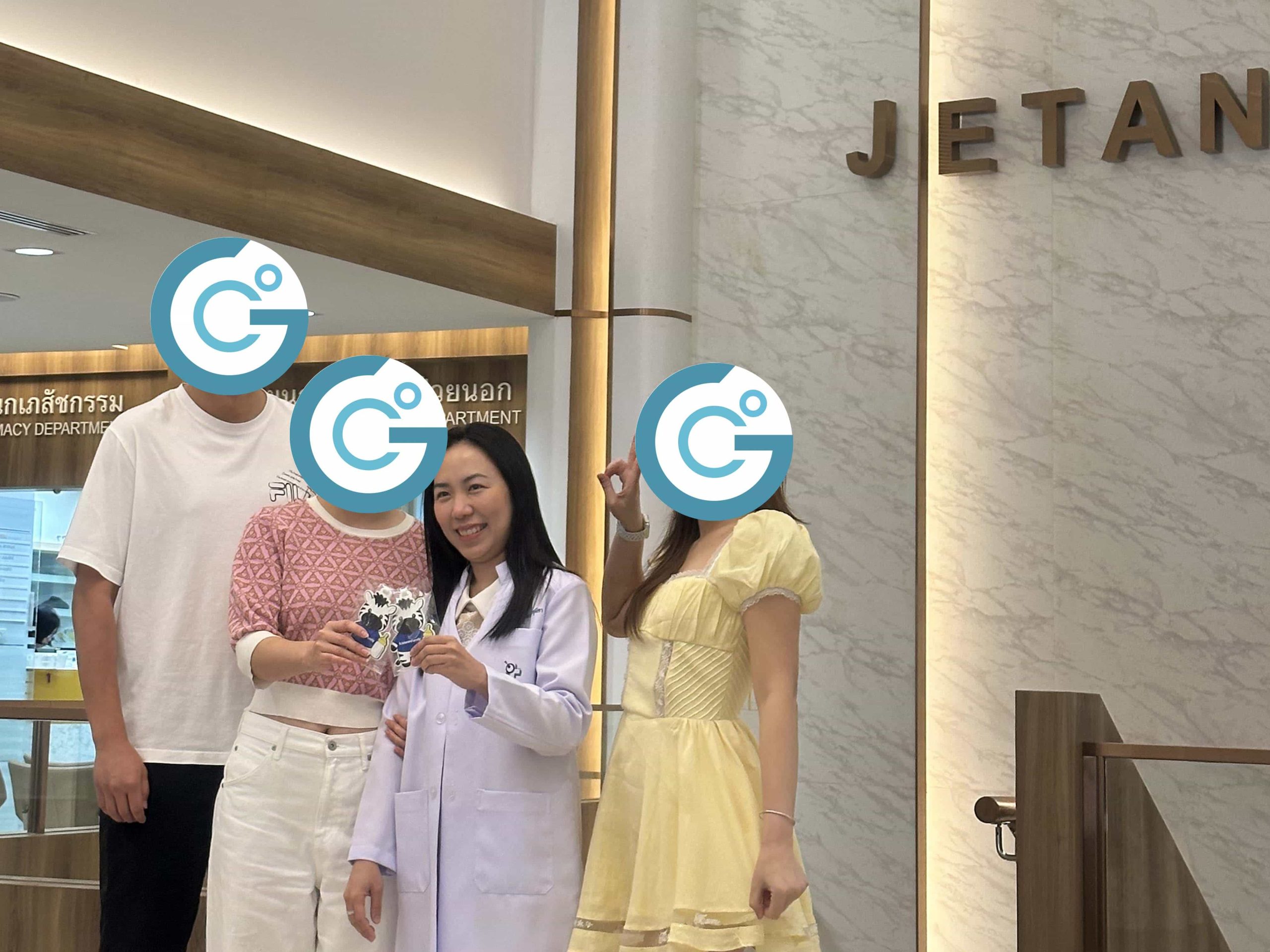
After two failed transplant attempts, she welcomed her own baby in Thailand.
35-year-old Ms. Wu had been married for years without becoming pregnant.
Previously, she had received assisted reproductive treatment in China and experienced two failed embryo transfers. Each time, she started with high hopes but ended in disappointment, placing immense physical and emotional strain on the couple.
Later, following a friend's recommendation, Ms. Wu contacted Global New Life, hoping to seek a more comprehensive fertility evaluation and treatment plan in Thailand. After consultation, we arranged for her to go to Jetanin Hospital in Bangkok for further examinations.
Upon detailed evaluation, the doctor found that Ms. Wu had a mild endocrine disorder and her intrauterine environment required further conditioning. The doctor believed that her previous failures were not necessarily due to embryo quality but were more likely related to the implantation environment.
Before starting a new cycle, the doctor first addressed her physical condition, including endocrine control, assessment of the uterine cavity, and a targeted treatment plan. Once her condition stabilized, Ms. Wu officially began the IVF cycle.
During this cycle, 13 mature eggs were retrieved, and multiple high-quality blastocysts were cultured. Considering her previous transfer history, the doctor further optimized the endometrial preparation protocol. Through uterine cavity assessment and endometrial conditioning, they aimed to improve synchronization between the embryo and endometrium, creating better conditions for implantation.
Finally, after another transfer, Ms. Wu received good news.
Her pregnancy went smoothly. Later, in her third trimester, Ms. Wu successfully welcomed her baby. At that moment, all the persistence, waiting, and challenges were answered.
Often, repeated failure does not mean there is no hope
In assisted reproduction, embryo quality, uterine environment, hormone levels, and personalized protocols all influence the final outcome. Identifying the issues, adjusting the approach, and developing a tailored plan is often more important than repeated attempts.
We wish every family longing for a baby,
that you may find your own happy ending.
— Global New Life

- Previous
- Next