
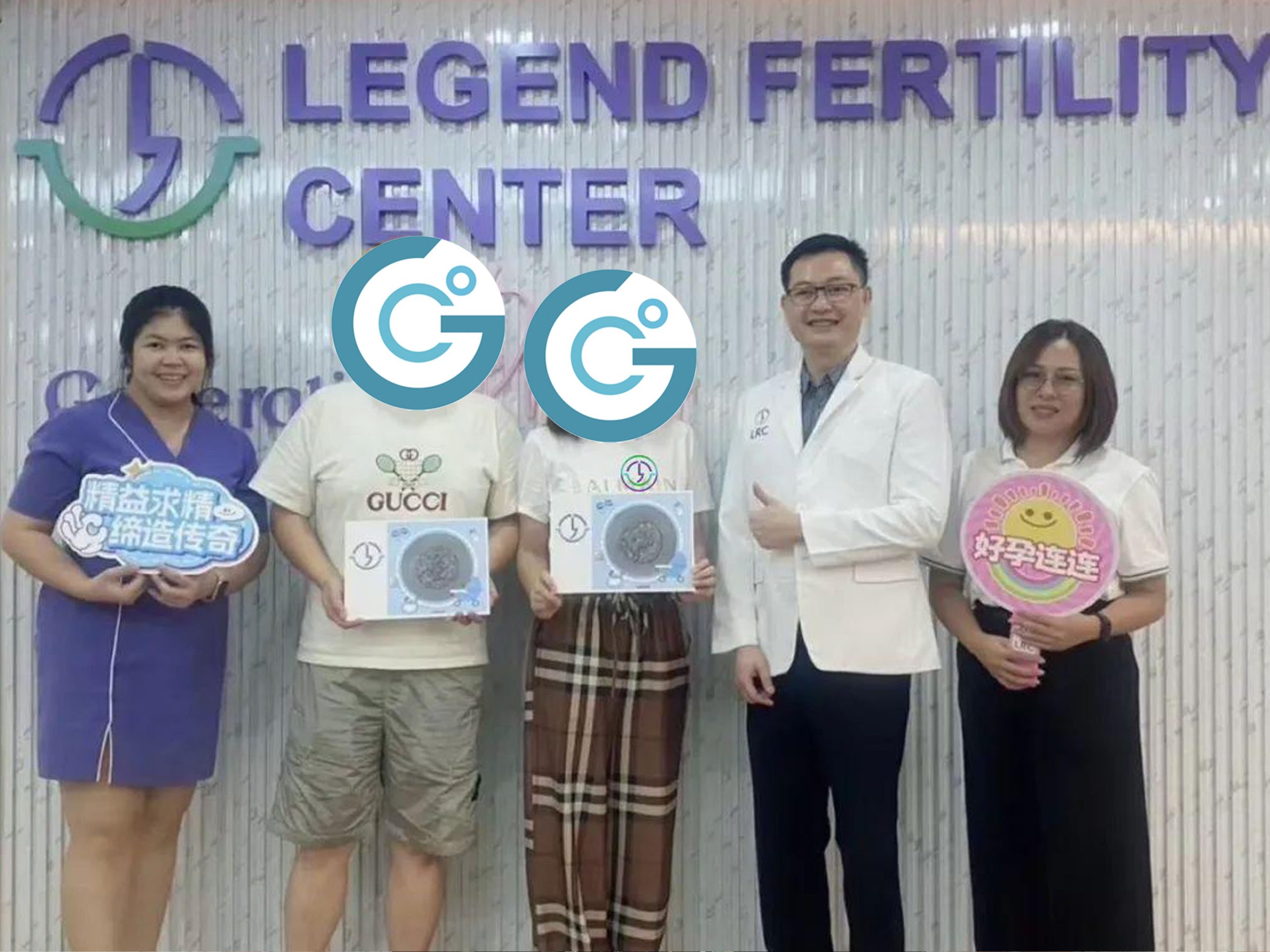
With AMH of only 0.457 and near ovarian failure, how did she obtain 4 healthy embryos in a single cycle at LRC in Thailand?
AMH Only 0.457, Ovarian Function Nearly Exhausted: How Did She Obtain 4 Healthy Embryos in One Cycle at Thailand LRC?
For many older couples preparing for pregnancy, seeing AMH continuously decline and FSH rise often signals a rapid loss of fertility potential.
Especially for families who have tried natural conception for years without success, anxiety and confusion are common.
Today, we share the story of client Ms. J, who, under these circumstances, traveled to Thailand LRC Fertility Center through Global New Life's overseas medical concierge service to undergo third-generation IVF, ultimately obtaining 4 healthy embryos that passed PGT-A screening, creating a valuable opportunity for a second child.
Years Without Contraception but No Pregnancy: She Decided to Seek New Hope
Ms. J is 38 years old. She had a natural delivery in her youth. Assuming a second pregnancy would not be too difficult, she did not use contraception for many years after childbirth. However, reality did not go as expected.
As age increased, the second-child plan remained elusive. After multiple tests, the issue turned out to be more complex than imagined.
To improve success rates, Ms. J ultimately chose Global New Life to start her overseas journey, going to Thailand LRC Fertility Center for more professional assisted reproductive solutions.
Test Results Were Concerning: Ovarian Function Had Significantly Declined
Before starting the IVF cycle, Ms. J underwent a comprehensive fertility assessment. The results showed:
- Age: 38
- AMH: 0.457 ng/mL
- FSH: 22.60 mIU/mL
The data indicated extremely low ovarian reserve. AMH below 1.1 typically suggests significantly diminished ovarian reserve, while FSH over 10 means the ovaries are less responsive to stimulation medications. Both of Ms. J's markers were clearly abnormal, classifying her as a classic poor ovarian responder (POR).
For IVF treatment, this means:
- Fewer recruitable follicles
- Limited number of eggs retrieved
- Increased risk of empty follicles
- Decreased egg quality
- Higher rate of embryo chromosomal abnormalities
Age factors further increased the difficulty of treatment.
Male Sperm Quality Also Had Issues
In addition to the female's diminished ovarian function, the male partner's test results were also less than ideal.
Semen analysis showed:
- Low semen volume
- High sperm abnormality rate
In this situation, even if eggs are successfully retrieved, fertilization rates and embryo quality could be affected.
Experienced reproductive specialists point out that men with a high proportion of abnormal sperm often have a higher risk of sperm DNA fragmentation, which may reduce embryo developmental potential and increase miscarriage risk.
Therefore, this case represents a classic dual-factor infertility.
Thailand LRC Experts Developed a Personalized IVF Protocol
Facing the complex situation, the medical team at Thailand LRC Fertility Center did not adopt a routine stimulation protocol. Instead, they created a Tailor-Made individualized stimulation plan based on Ms. J's condition.
Before starting stimulation, tests showed only 3 to 4 antral follicles, and they were small. To maximize ovarian protection and improve egg utilization, the medical team adopted a fine-tuned management approach.
The treatment combined:
- Clomiphene citrate
- Letrozole
- Menopur
- DHEA to improve egg quality
- Provera to stabilize hormone levels
- Active folate and vitamin D3 support
Additionally, an egg maturation trigger was added early on Day 4 to prevent premature ovulation. Throughout the cycle, medication doses were adjusted based on dynamic monitoring to maximize the maturation probability of each follicle.
Sperm Optimization Technology Was Also Applied
To address male sperm quality issues, the LRC laboratory simultaneously used SPERM MACS magnetic-activated cell sorting technology. This technique preferentially selects sperm with better motility and higher DNA integrity for fertilization.
In third-generation IVF treatment in Thailand, such advanced laboratory techniques play a significant role in improving embryo quality. Intracytoplasmic sperm injection (ICSI) was then used for fertilization.
Egg Retrieval Results Exceeded Expectations
After close monitoring and precise stimulation, Ms. J successfully underwent egg retrieval.
Final results:
- 5 eggs retrieved
- 4 mature eggs (MII)
For a patient with AMH of only 0.457, this result was significantly better than expected.
Even more surprising: all 4 mature eggs were successfully fertilized. ICSI fertilization rate reached 100%.
Blastocyst Culture Results Were Encouraging
After fertilization, all embryos proceeded to blastocyst culture.
Final results:
- Number of blastocysts formed: 4
- Blastocyst formation rate: 100%
For an older patient with severely diminished ovarian reserve, such a blastocyst development outcome is remarkable. It indicates that both egg quality and the laboratory culture system were of a high standard.
PGT-A Screening Results: All 4 Were Normal
Subsequently, all 4 blastocysts underwent PGT-A chromosomal screening.
The results showed: all 4 blastocysts passed chromosomal testing, all meeting transfer criteria.
This means more options for future transfers and significantly reduced risk of miscarriage due to chromosomal abnormalities. For older women trying to conceive, this is the greatest value of third-generation IVF in Thailand.
Global New Life Helps More Families Achieve Their Fertility Dreams
In the field of assisted reproduction, age is never the only determining factor. Scientific assessment, personalized treatment plans, advanced laboratory techniques, and a professional medical team can often help families who seemed to have little hope regain opportunities.
As a platform focusing on overseas fertility services, Global New Life maintains long-term partnerships with quality assisted reproductive institutions such as Thailand LRC Fertility Center, providing clients with:
- Third-generation IVF consultation in Thailand
- Overseas fertility planning services
- Cross-border childbirth plan customization
- Overseas medical escort and translation services
- Fertility specialist appointment
- Full-process assistance for travel to Thailand
Behind every successful case lies a family's hope for a new life.
For families experiencing advanced maternal age, diminished ovarian function, repeated IVF failures, or other issues, perhaps a professional evaluation can open the door to a successful journey to parenthood.

- Previous
- Next