
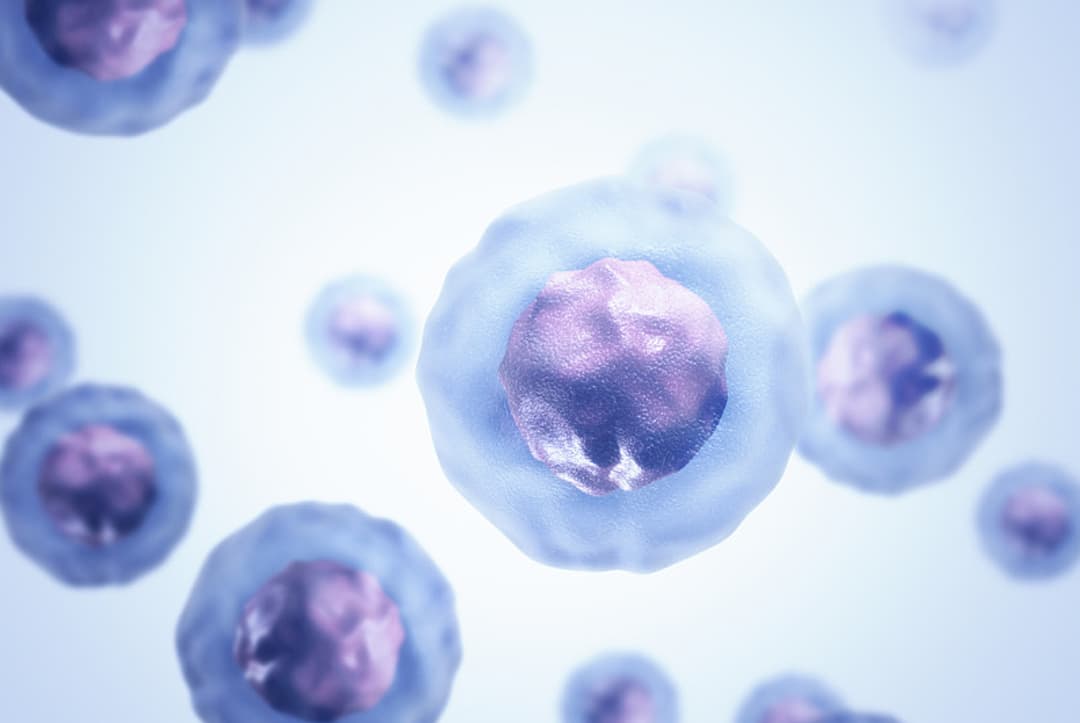
20 Eggs Retrieved but No Blastocyst? A Landmark Study in Cell Finally Identifies the True Cause of Blastocyst Failure and Embryo Arrest.
20 Eggs Retrieved but No Blastocyst? Landmark Study in Cell Finally Reveals the True Causes of Blastocyst Culture Failure and Embryo Arrest
Many families undergoing IVF encounter a perplexing situation: despite a good ovarian stimulation response, with ten or even twenty eggs retrieved, few embryos develop into blastocysts—or all stop growing entirely. In other cases, embryos with favorable grades fail to produce the desired outcome after transfer.
Why is it that a sufficient number of eggs does not guarantee high-quality embryos? Is the problem in the laboratory culture conditions, or is it an inherent defect in the embryos themselves?
This long-standing challenge in the global assisted reproduction field has now seen a breakthrough.
In June 2026, a Chinese research team published two landmark studies in the top-tier international academic journal Cell, revealing for the first time two core reasons for the low developmental efficiency of human embryos before implantation. These findings provide a new scientific basis for improving embryo culture quality in IVF, particularly in Thai third-generation IVF, and offer renewed hope for families seeking overseas fertility treatment or cross-border childbearing.
Why Does Retrieving Many Eggs Still Lead to Blastocyst Culture Failure?
Many assume that a higher number of retrieved eggs translates to a greater chance of success. In reality, egg count is only the first step in the entire assisted reproduction process. What truly determines the subsequent outcome is the embryo's own developmental potential.
After a mature egg is fertilized, it must undergo multiple cell divisions, gradually developing into a morula and then a blastocyst, before finally being able to implant. If any step in this process goes awry, the embryo may stop developing.
In the past, physicians could only assess embryo quality based on appearance, cleavage rate, and morphological grading. However, these indicators only reveal the "surface" without insight into what is happening inside the embryo. This is why many experts refer to it as "seeing the appearance, but not the inner workings".
The Cell study has now opened the "black box" of early embryo development.
Cell Study Reveals Two Critical "Checkpoints" in Embryo Development
To find answers, the research team used state-of-the-art high-throughput live-cell imaging to continuously observe human embryos for 120 hours, recording the entire developmental process over five days after fertilization.
The researchers identified two key checkpoints that embryos must pass.
Checkpoint One: The Second Cell Division Matters More Than the First
Many previously believed that the first cell division was the most prone to errors.
However, the latest research found that more than 70% of early embryo arrests actually occur during the second cell division.
At this stage, the spindle—the structure responsible for chromosome segregation—plays a crucial role. If spindle abnormalities arise, chromosome distribution errors occur, leading to cells with abnormal chromosome numbers, and the embryo loses its ability to continue developing.
This also explains why some embryos appear normal in early culture but suddenly stop growing.
Checkpoint Two: Why Can Blastocyst Culture Fail Even with Normal Chromosomes?
Surprisingly, not all blastocyst culture failures are linked to chromosomal abnormalities.
The study found that some embryos with completely normal chromosomes still fail to develop into blastocysts.
The real problem lies in the cell's "protein factory"—the endoplasmic reticulum.
When the endoplasmic reticulum experiences stress imbalance, cells cannot properly synthesize the essential proteins needed for continued embryo development. Consequently, the embryo becomes stalled at the morula stage, leading to failed blastocyst culture.
In other words, some embryos may appear "healthy on the outside" but have already lost the internal capacity to develop further.
What Does This Discovery Mean for IVF?
Compared to the past, when we could only rely on experience-based assessments, the greatest significance of this study is that it has identified clear targets for intervention.
The research team has preliminarily validated that by modulating specific molecules during the critical second division stage, chromosome segregation errors can be significantly reduced, increasing the proportion of normal cells. This provides a new direction for optimizing embryo culture protocols in the future.
Although these findings are still in the clinical translation phase, as the technology matures, they may eventually help more families who experience recurrent blastocyst culture failure or embryo arrest obtain more usable embryos.
For families planning Thai third-generation IVF, this research also holds valuable relevance. Today, a growing number of international reproductive centers are closely monitoring advances in embryo culture techniques, laboratory equipment, and research findings—because what truly determines embryo quality is not just the laboratory environment, but also continuous scientific innovation.
Final Thoughts
As assisted reproductive technology continues to advance, IVF is gradually moving from "experience-based judgment" to "precision intervention." Each scientific breakthrough means that in the future, more families may be spared the time and emotional burden of repeated attempts.
If you are planning an overseas fertility journey or wish to learn more about Thai third-generation IVF, cross-border childbearing, and overseas medical companionship, it is advisable to conduct a thorough scientific evaluation and tailor a plan that suits your individual circumstances.
Global New Life will continue to follow the latest research developments in international assisted reproduction, sharing professional and objective educational content for families in need. Our goal is to help you gain a deeper understanding of the direction of assisted reproductive technology and prepare more thoroughly for the future.

- Previous
- Next