
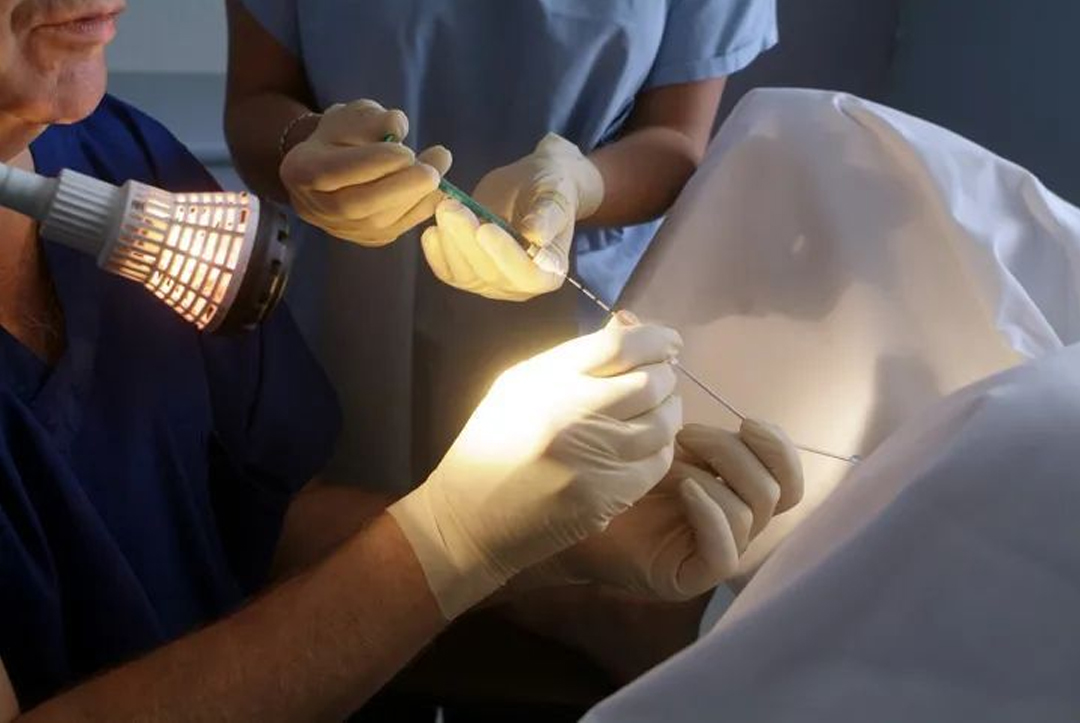
Why does one IVF transfer succeed for some, while others face repeated failures? Two critical issues many IVF families have yet to uncover!
```html
Why do some succeed on their first embryo transfer while others experience repeated failure? These 2 key issues many IVF families have overlooked
For families undergoing IVF cycles, embryo transfer is often the most anticipated moment.
From initial testing, ovarian stimulation and egg retrieval, to embryo culture and finally the transfer stage, each step demands significant time, effort, and hope. Yet in reality, many find themselves puzzled: why is it that some achieve success with their very first transfer, while others go through two, three, or even more transfers with no outcome?
This is especially true for families undergoing third-generation IVF cycles in Thailand, where many already have good-quality blastocysts and have even completed embryo chromosomal screening—yet still face repeated implantation failure.
In truth, the factors affecting embryo implantation go far beyond what meets the eye.
Over years of assisting families seeking fertility treatment abroad, we at Global New Life have observed that most cases of repeated implantation failure are closely linked to two core factors. Beyond these, there are also hidden factors that are easily overlooked but may still influence the final outcome.
Today, we take a closer look at the real reasons behind repeated implantation failure.
What qualifies as "repeated implantation failure"?
Many believe that if a single transfer does not succeed, it indicates a problem with the body. In reality, this is not necessarily the case. Even with today's advanced assisted reproductive technology, no single embryo transfer can guarantee a success rate.
Currently, the international medical community does not have a universally accepted definition for "repeated implantation failure." However, it is generally considered that when a woman has undergone multiple transfer cycles and transferred a certain number of good-quality embryos without achieving clinical pregnancy, she may fall within the evaluation scope for RIF.
In simple terms, if good-quality embryos have been transferred multiple times without implantation, further investigation into the underlying causes is needed—rather than simply repeating transfers. IVF is not merely about placing an embryo into the uterus; it is a complex process involving embryo quality, uterine environment, endocrine function, immune system status, and overall health working together.
The first key factor: Embryo quality determines the starting point of success
If embryo transfer is compared to planting a seed, the embryo itself is the seed. The quality of the seed directly determines whether it will successfully germinate.
Why do blastocysts have a higher success rate?
Many families new to IVF encounter two terms: cleavage-stage embryos and blastocysts.
The main difference lies in development time. Cleavage-stage embryos are typically cultured to day 2-3 and consist of only a few cells. Blastocysts, on the other hand, are cultured to day 5-6, developing into hundreds of cells with a more complete structure and greater viability.
Because the timing of blastocyst transfer more closely aligns with natural conception, the synchronization with the endometrium is better, leading to a higher chance of implantation.
Based on clinical experience: Blastocyst transfer success rates are generally higher than those of standard cleavage-stage embryos.
Therefore, for individuals who have experienced multiple failed transfers, blastocyst culture is often an important avenue to explore for improving success rates.
Why is third-generation IVF in Thailand attracting attention?
In recent years, more and more families have chosen to travel to Thailand for third-generation IVF. One of the key reasons is PGT embryo screening technology.
Simply put: a good-looking embryo does not guarantee normal chromosomes. Even embryos with top grades may have chromosomal abnormalities.
With third-generation IVF technology, embryo chromosomes can be screened before transfer, helping to select chromosomally normal embryos for transfer. This may not only improve the chances of implantation but also reduce the risk of biochemical pregnancy and miscarriage.
Therefore, in the journey of seeking fertility treatment abroad, many families with repeated failures consider third-generation IVF in Thailand a key option.
However, it is important to note that even with a screened, good-quality embryo, success is not guaranteed. The embryo is only half of the equation. The other half depends on the uterine environment.
The second key factor: Endometrial receptivity determines whether the embryo can stay
If the embryo is the seed, the endometrium is the soil. Even the best seed will struggle to take root and grow in poor soil.
Is thicker endometrium always better?
Many people focus most on endometrial thickness before transfer. In reality, thickness is just one reference indicator.
It is generally considered that an endometrial thickness of around 8-12mm is more suitable for embryo implantation.
However, in practice, some women with a thickness of only about 7mm achieve pregnancy successfully, while others with a thickness of over 12mm still experience transfer failure.
The reason: the outcome of implantation depends not only on thickness but on overall receptivity.
What is endometrial receptivity?
Simply put, it refers to whether the endometrium is ready to welcome an embryo. It involves several aspects:
- Adequate uterine blood supply
- Intact endometrial structure
- Absence of inflammation
- Balanced microbial environment
- Coordinated hormone levels
- Absence of uterine pathology
For example: endometritis; adenomyosis; uterine fibroids; intrauterine adhesions; endometrial damage—these issues may all affect embryo implantation.
Therefore, during IVF cycles, physicians look beyond endometrial thickness and comprehensively evaluate the overall uterine environment.
The first hidden factor many overlook: Immune system imbalance
When immune issues are mentioned, most people think of recurrent miscarriage. In fact, immune factors begin playing a role at the implantation stage.
An embryo inherits half its genes from the mother and half from the father. In a sense, the embryo is "semi-foreign" to the maternal immune system.
Under normal circumstances, the body establishes a special immune tolerance mechanism that allows the embryo to implant and develop. However, if the immune system is abnormal, it may recognize the embryo as a foreign entity.
This can potentially lead to:
- Failure of the embryo to implant
- Implantation failure
- Biochemical pregnancy
- Miscarriage
Therefore, for individuals who have experienced multiple failed transfers, immune-related evaluation may be important. In the overseas medical accompaniment cases served by Global New Life, many families have identified potential immune factors through further investigation and gained new direction.
The second hidden factor many overlook: Long-term suboptimal health status
Beyond embryo and uterine environment, another often underestimated factor is the body's overall condition.
Many women preparing for IVF endure significant stress over a long period—concerns about advancing age, fear of failure, worries about family expectations, and anxiety about financial investment.
Chronic anxiety, sleep deprivation, insufficient rest, and excessive emotional fluctuations may all affect the endocrine system.
Research suggests that long-term psychological stress may lead to elevated stress hormones, which can affect ovarian function, uterine blood flow, and hormonal balance.
It may also impact: sleep quality; metabolism; immune function; hormone secretion.
These changes can indirectly affect the environment for embryo implantation. Therefore, in the process of cross-border or overseas fertility treatment, it is important to focus not only on the technology itself but also on the simultaneous adjustment of physical and mental well-being.
What should you do after repeated implantation failure?
If you have experienced multiple failures, blindly repeating transfers is not recommended. It is more important to find the underlying cause. Re-evaluation can typically be approached from the following directions:
1. Re-evaluate embryo quality
Confirm whether blastocyst culture was performed; consider whether embryo screening may be necessary; verify that laboratory culture conditions meet standards.
2. Thoroughly examine the uterine cavity environment
Investigate for: intrauterine adhesions; endometritis; endometrial polyps; uterine fibroids; adenomyosis, and other influencing factors.
3. Assess immune and endocrine status
Pursue more in-depth evaluation when indicated.
4. Improve lifestyle
Maintain a regular routine; manage weight; exercise moderately; reduce mental stress; improve overall health.
Final thoughts
IVF has never been a simple choice. A single failure does not mean there is no chance, and multiple failures do not mean there is no hope. Often, the outcome is not the result of one single factor, but the combined effect of multiple factors working together.
For families considering third-generation IVF in Thailand, overseas fertility treatment, or cross-border childbirth, it is important to look beyond the technology itself and also focus on embryo quality, uterine environment, immune status, and overall health.
As an organization dedicated to overseas fertility services, Global New Life is committed to providing professional consultation, overseas medical accompaniment, and full-process support, helping more families navigate their journey with a well-planned approach and fewer detours.
May every effort be rewarded, and may every family hoping to welcome a new life take one step closer to their dream.
```

- Previous
- Next