
Don’t Be Scared by the Word “Polycystic” Anymore! Here’s What You Really Need to Worry About
When many women receive their health check report, the first reaction upon seeing words like "polycystic ovaries," "polycystic appearance," or "Polycystic Ovary Syndrome (PCOS)" is often anxiety and worry.
"Does this mean there are many cysts on my ovaries?"
"Will it be very difficult to get pregnant?"
"Do I need surgery?"
"Will IVF be my only option?"
In fact, these are the most common misunderstandings about "polycystic".
Although Polycystic Ovary Syndrome is one of the common endocrine disorders in women, it does not mean the ovaries are filled with cysts, nor does it mean the loss of fertility. What truly matters is ovulation function, hormone levels, and metabolic status—not being frightened by the term "polycystic" alone.
Today, Huanqiu Xinsheng helps you re-understand Polycystic Ovary Syndrome, so more women preparing for pregnancy can correctly understand their bodies and reduce unnecessary anxiety.
1. The term "polycystic" is actually the most misleading
When hearing "Polycystic Ovary Syndrome" for the first time, many people instinctively think:
"Are there many cysts on the ovaries?"
Actually, no.
The "cystic" here does not refer to the cysts people commonly understand, nor is it a tumor.
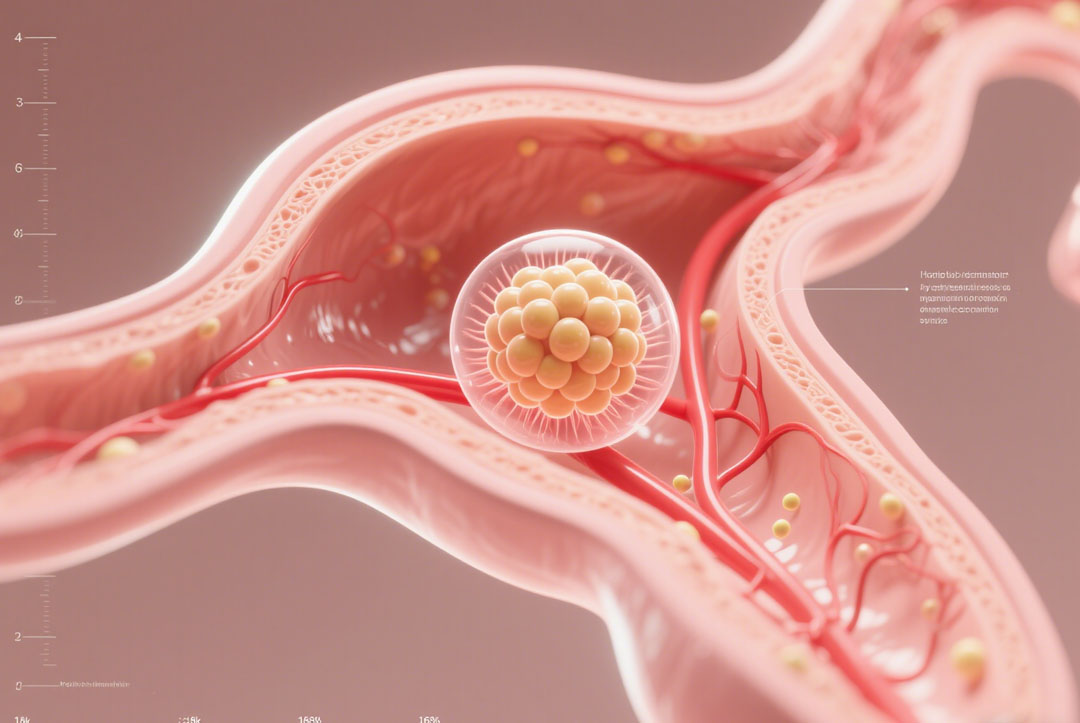
Medically, "polycystic" mainly refers to the presence of many small, neatly arranged follicles visible around the ovaries on an ultrasound.
These small follicles are not abnormally proliferated tissue. They are a group of follicles that should have continued to develop and eventually ovulate, but due to various endocrine factors, their development stopped midway, so they remain temporarily in the ovaries.
Under normal circumstances, each month a woman's ovaries recruit a group of small follicles to develop together. Typically, only one dominant follicle matures and ovulates successfully, while the rest gradually regress.
In patients with PCOS, due to impaired ovulation, these follicles fail to grow and be released properly. Therefore, on ultrasound, they appear as the "polycystic appearance".
Thus, polycystic ovaries do not represent a serious ovarian pathology, let alone cancer, and certainly do not require surgical removal.
What truly deserves attention is whether there are persistent ovulation disorders, hormonal imbalances, and metabolic abnormalities.
2. Does a "polycystic appearance" on ultrasound mean you have PCOS?
The answer is no.
Many women start worrying when they see "polycystic appearance" on their health report, but this finding is not uncommon.
Especially in adolescent girls, young women, and even some normal reproductive-age women, having multiple small follicles on ultrasound is a relatively common physiological manifestation due to active ovarian function.
If the following are also present:
- Regular menstrual cycles;
- Normal ovulation;
- No significant acne, excess body hair, or hair loss suggestive of hyperandrogenism;
- Normal hormone tests.
Then, this "polycystic appearance" is likely just an imaging finding and cannot be diagnosed as PCOS.
Currently, clinical diagnosis of PCOS typically requires comprehensive evaluation of three aspects. After excluding other conditions, meeting two of the following criteria may lead to a diagnosis:
① Ovulation abnormality
For example, menstrual cycles consistently longer than 35 days, infrequent periods, amenorrhea, or chronic anovulation.
② Clinical or biochemical hyperandrogenism
Including recurrent acne, acne around the chin and mouth, increased upper lip hair, hair loss, or elevated androgen levels on blood tests.
③ Polycystic ovaries on ultrasound
Including the presence of many small follicles in one or both ovaries, combined with AMH (Anti-Müllerian Hormone) and other indicators for comprehensive assessment.
Therefore, remember this: a polycystic appearance is just a test result, while PCOS is a comprehensive condition. They cannot be directly equated.
3. Why does PCOS affect menstruation, skin, and weight?
Many women notice that PCOS not only affects their periods but also causes acne, weight gain, and increased body hair—symptoms that seem unrelated. In fact, these manifestations all stem from changes in the body's endocrine and metabolic systems.
1. Ovulation issues lead to menstrual irregularities
When ovulation is reduced or stops, the menstrual cycle naturally lengthens. Some women have periods every two to three months, while others may not have one for six months.
Chronic anovulation can also cause the endometrium to be continuously stimulated by estrogen without the protective effect of progesterone, leading to sudden heavy bleeding, prolonged periods, or irregular bleeding.
2. Elevated androgens cause skin changes
Women naturally have a certain amount of androgens, which are important for normal bodily functions. However, if androgens are overproduced or the body is more sensitive to them, it can lead to:
- Recurrent facial breakouts;
- Closed comedones on the chin and around the mouth;
- Thinning hair on the scalp;
- Increased hair on the upper lip, legs, and abdomen;
- Oily skin.
Therefore, many women think they simply have skin issues, but it may be a signal from their endocrine system.
3. Insulin resistance: an often overlooked issue
Many women with PCOS also have insulin resistance. Simply put, the body's ability to use glucose is reduced, so to maintain normal blood sugar, the body secretes more insulin.
Chronic high insulin levels not only make weight management more difficult but also further stimulate the ovaries to produce more androgens, creating a vicious cycle.
This is why many women with PCOS feel:
- The harder they try to lose weight, the harder it becomes;
- Diet control has limited effects;
- Weight tends to rebound easily.
Thus, PCOS is not just an ovarian issue—it involves the body's overall metabolic balance.
4. Does PCOS mean you cannot get pregnant?
This is a question almost every woman trying to conceive asks.
The answer is: no.
PCOS can indeed affect natural conception because fewer ovulations mean fewer opportunities to become pregnant. A normal woman has about 12 ovulation opportunities per year, while some women with PCOS may only ovulate a few times a year, so the time to conceive may be longer.
But it is important to emphasize: PCOS does not equal infertility.
Clinically, many women with PCOS achieve natural pregnancy through lifestyle adjustments, improved metabolism, and medically supervised ovulation induction. For those who have not conceived after standard treatment, or who have other fertility factors, assisted reproductive technologies such as IVF can be considered after evaluation by a specialist.
In recent years, with the continuous advancement of medical technology, many families also explore options such as third-generation IVF in Thailand, seeking fertility abroad, or cross-border childbirth, hoping to leverage more mature medical resources to improve their chances. Of course, the specific approach chosen should be based on comprehensive evaluation of age, ovarian reserve, embryo status, and overall health.
As a service organization with long-term expertise in the assisted reproduction field, Huanqiu Xinsheng provides professional information consultation and overseas medical accompaniment services tailored to each family's actual situation, helping them complete the entire medical journey with greater peace of mind and efficiency.
5. After being diagnosed with PCOS, what should you focus on?
If you have discovered that you have PCOS, don't panic, and don't blindly believe in unproven remedies.
It is recommended to scientifically manage your body in the following areas.
① Keep a menstrual record
It is advisable to track:
- Menstrual cycle length;
- Flow volume changes;
- Duration of menstruation;
- Whether ovulation occurs.
Regularity of menstruation is an important indicator of endocrine status.
② Assess androgen levels
If you experience recurrent acne, increased body hair, or noticeable hair loss, you can undergo a comprehensive sex hormone panel (including total testosterone and free androgen index) under your doctor's guidance to see if there are abnormalities.
③ Prioritize metabolic testing
In addition to gynecological exams, it is recommended to evaluate:
- Fasting blood glucose;
- Fasting insulin;
- Oral glucose tolerance test;
- Hemoglobin A1c;
- Lipid profile;
- BMI and waist circumference.
Often, improving insulin resistance and metabolic status is very important for restoring ovulation.
④ Develop a plan based on your fertility goals
If you do not plan to become pregnant in the near future, the focus should be on:
- Regulating menstrual cycles;
- Managing weight;
- Improving skin issues;
- Reducing the future risk of diabetes and cardiovascular disease.
If you are already trying to conceive, it is recommended to start ovulation monitoring, assess ovarian function, and evaluate your partner's semen analysis as early as possible. Develop a scientific preconception plan under the guidance of a specialist.
If you have not conceived after a prolonged period, there is no need to worry excessively. Consult a reproductive specialist in time to evaluate whether assisted reproductive technologies such as IVF may be considered. For families with international medical needs, they can also learn about third-generation IVF in Thailand, seeking fertility abroad, cross-border childbirth, and related overseas medical accompaniment services in advance to prepare fully for future fertility plans.
Final Thoughts
Often, what truly frightens women is not the disease itself, but a lack of correct understanding.
PCOS does not mean the ovaries are filled with cysts, nor does it mean losing the chance to become a mother.
What truly matters is whether ovulation is regular, hormones are balanced, metabolism is healthy, and whether you take scientific management measures appropriate to your situation.
If your health report shows a "polycystic appearance," do not jump to conclusions based solely on one ultrasound. And do not fall into anxiety because of information online.
For women preparing for pregnancy—whether trying naturally or needing to learn more about IVF, third-generation IVF in Thailand, or other assisted reproduction options—all decisions should be based on professional evaluation. Huanqiu Xinsheng hopes every woman can understand her body with a more scientific and rational attitude, find a fertility plan that suits her under professional guidance, so that every effort is more focused, and every journey toward motherhood is more reassuring.

- Previous
- Next