
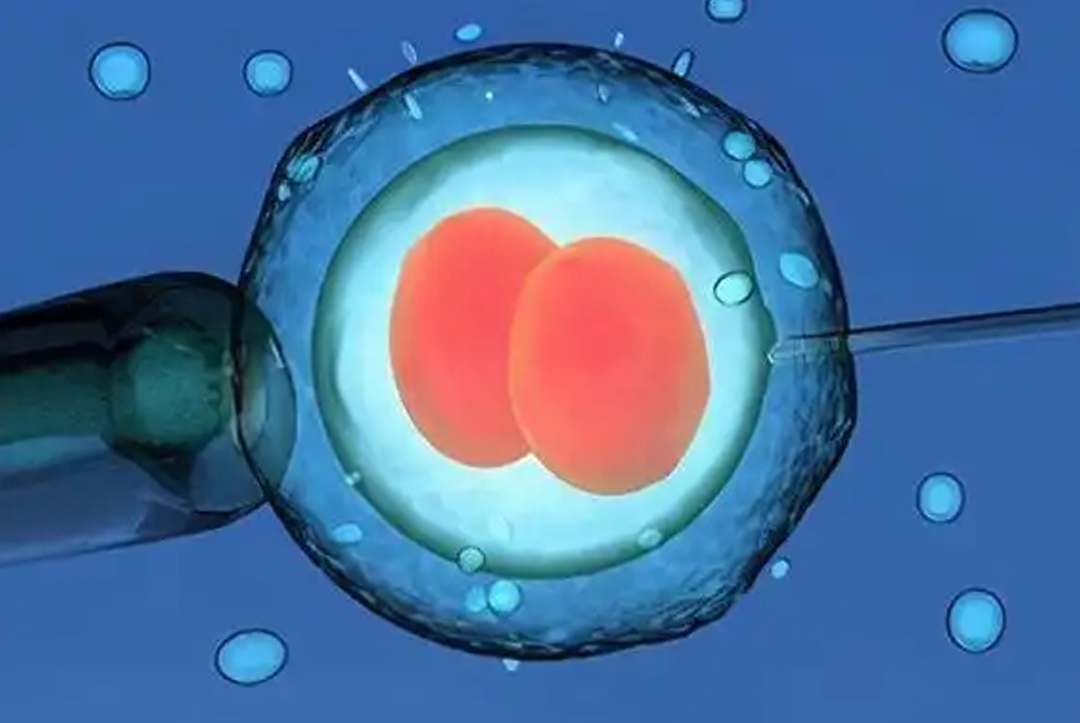
Why is double embryo transfer strongly discouraged in IVF?
Why Double Embryo Transfer Is Strongly Discouraged?
Today, I want to address a question that is frequently asked.
During IVF, when it comes to embryo transfer, many people ask: "I have several embryos that passed screening. Can I transfer two at once to have twins?"
In the US, almost every doctor will clearly tell you: It is not recommended, and strongly discouraged.
This has been studied for many years. The American Society for Reproductive Medicine (ASRM), the European Society of Human Reproduction and Embryology (ESHRE), and even China's National Health Commission in the "Assisted Reproductive Technology Guidelines" (2020 and 2022 editions) all explicitly state: strongly recommend against transferring two embryos.
Today, I will explain why there is such strong opposition to double embryo transfer.
Some may think, "Are you just trying to make me do another cycle?" or "Are you trying to charge more?" The truth is, there are many medical reasons behind this.
Let's break it down into three points:
- First, the impact of twin pregnancy on the baby.
- Second, the impact of twin pregnancy on the mother.
- Third, let's look at statistics to see if double embryo transfer is worth it.
Let's start with the first point:
Impact of Twin Pregnancy on the Baby
For the following reasons, twin pregnancy is classified as high-risk in medicine.
First and foremost: preterm birth
The preterm birth rate for twins is very, very high. According to the US CDC 2020 data: for singleton pregnancies, whether IVF or natural, the preterm birth rate is about 10%. That means about 1 in 10 singleton pregnancies may be preterm.
Preterm birth is defined as delivery before 37 weeks.
For twin pregnancies, based on the US CDC 2022 report: the preterm birth rate is as high as 60%–65%. That means 60% to 65% of twin pregnancies do not reach 37 weeks. The average gestational age is about 35 weeks.
Why is that? The uterus has a limited space. Carrying one baby is already challenging; placing two makes it difficult to carry to term. So preterm birth becomes a very high risk.
What problems does preterm birth cause? These are well-known: underdeveloped lungs, neonatal respiratory distress syndrome, jaundice, and neurological or brain development issues.
Just this one risk factor jumps from 10% in singletons to 60%–65% in twins, an increase of more than 6 times.
Second issue: low birth weight
Medically, if a newborn weighs less than 2500 grams, it is considered low birth weight. Low birth weight babies often have developmental issues, higher survival risks, and more health problems later.
The data: for singleton pregnancies, the low birth weight rate is about 8%; for twin pregnancies, it is as high as 57%. That is about 7 times higher.
Third: NICU admission rate
Twin newborns are admitted to the NICU at a rate 3.4 times higher than singletons.
Reasons for NICU admission include underdeveloped lungs, respiratory distress syndrome, severe jaundice, brain development issues, etc. NICU stays place enormous psychological and financial burdens on parents.
So you see: preterm birth, low birth weight, immature lungs, respiratory distress syndrome, cerebral hemorrhage, necrotizing enterocolitis—these neonatal problems all increase significantly with preterm birth. This is why, from the baby's perspective, we strongly oppose double embryo transfer.
Impact of Twin Pregnancy on the Mother
The following data is from the latest ASRM 2023 clinical statistics, comparing twin vs singleton pregnancies.
First: gestational hypertension
- Singleton: approximately 6%–8%
- Twin: approximately 20%
That is 2.5 to 3 times higher.
Second: gestational diabetes
- Singleton: approximately 5%–7%
- Twin: approximately 13%
Nearly 2 times higher.
Third: cesarean section rate
Some may think C-section is simpler, but it's important to emphasize: C-section is a major surgery.
In the US and China, efforts are made to reduce unnecessary C-sections.
The data:
- Singleton: approximately 30%
- Twin: as high as 75%–80%
So with twins, a C-section is almost certain.
Fourth: severe postpartum hemorrhage
- Singleton: approximately 2%
- Twin: 7%–10%
That is 3 to 5 times higher. Severe postpartum hemorrhage is a life-threatening complication.
So you can see, for both baby and mother, the risks of twin pregnancy are comprehensively increased.
Is Double Embryo Transfer Really Worth It?
Now, the third point: why do some people still want double embryo transfer despite knowing these risks?
The reason is simple: to increase pregnancy rates. Especially for older women with limited embryos, transferring one more embryo statistically improves the chance of pregnancy.
But the question is: how much does it increase? Is it worth it?
According to SART (Society for Assisted Reproductive Technology):
- Average pregnancy rate for single embryo transfer: about 60%
- Pregnancy rate for double embryo transfer: about 65%–67%
In other words, you endure a 2 to 6 times increase in all risks for only a 5%–7% improvement in pregnancy rate.
That is why all authoritative institutions in the US, Europe, and China unanimously oppose double embryo transfer. The reason lies here.
- Previous
- Next