
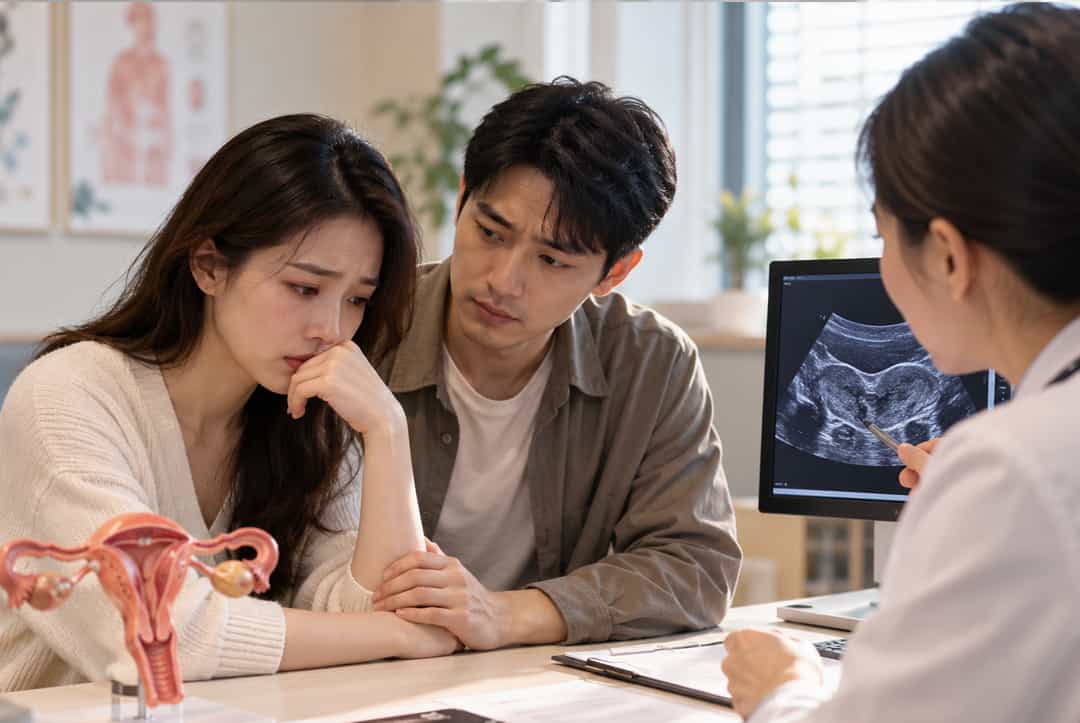
The embryo looks good—so why doesn’t it implant? If you’ve had repeated transfer failures, don’t overlook this “hidden factor.”
The embryo looks perfectly good, so why does it still fail to implant? If you have recurrent implantation failure, don't overlook this "hidden factor"
When undergoing IVF, many people focus most of their attention on the embryo.
How many embryos developed? What grade are they? Did any become blastocysts? Is the PGT result normal? For those pursuing third-generation IVF in Thailand, many families pay even more attention to embryo screening results.
So when a seemingly promising embryo still fails to implant after transfer—or when there is a biochemical pregnancy, early miscarriage, or recurrent implantation failure—many people's first reaction is:
Is the embryo still not good enough?
But in reality, whether embryo transfer succeeds is never determined by the embryo alone.
If the embryo is a seed, the endometrium is the soil in which it must take root and grow. The seed itself is certainly important, but if the "soil" has abnormal receptivity, inflammation, or a uterine cavity environment problem, even an embryo with a good morphological score—or one that has undergone genetic testing—does not necessarily mean it will implant successfully after transfer.
For people undergoing IVF, third-generation IVF in Thailand, overseas fertility treatment, or cross-border fertility care, if they have already experienced one or more failed transfers, then in addition to reevaluating embryo-related factors, there is another easily overlooked issue worth discussing—chronic endometritis (CE).
This is especially relevant for women who also have adenomyosis, endometriosis, or chocolate cysts; it is worth discussing with a reproductive specialist whether further evaluation of the endometrium and uterine cavity is needed.
1. When a good embryo fails to implant, the problem may not lie only with the embryo
In assisted reproduction, the causes of implantation failure, biochemical pregnancy, or early pregnancy loss are highly complex.
Embryonic chromosomal abnormalities, embryonic developmental potential, the woman's age, endometrial status, structural abnormalities of the uterine cavity, endocrine factors, and other individual factors may all affect the final pregnancy outcome. Therefore, there is no single clinical cause that can explain every instance of implantation failure.
One important reason chronic endometritis deserves attention is that it can sometimes be quite "silent."
Unlike acute inflammation, some patients with chronic endometritis do not experience obvious abdominal pain, fever, or abnormal bleeding; some may even have no noticeable discomfort at all. Therefore, it is difficult to determine whether there is a problem with the endometrium based on physical symptoms alone.
A retrospective cohort study published in BMC Women's Health examined the relationship between adenomyosis, infertility, and chronic endometritis. The study data showed that, in that study population, when assessed by hysteroscopy, the detection rate of chronic endometritis was 75.3% in the adenomyosis group and 46.8% in the control group; on histopathological assessment, the rates were 74.0% and 33.8%, respectively. Don't blame failed implantation solely on the embryo! This hidden obstacle to implantation is one many people have not checked…
It is important to note that these figures come from a specific study population seeking care for infertility and should not be simplistically interpreted as meaning that "all women with adenomyosis have about a 75% chance of having chronic endometritis." However, this study at least suggests that for people with adenomyosis and infertility, chronic endometritis may be an associated condition worthy of further attention.
This is especially relevant for people who have experienced recurrent implantation failure.
Because sometimes the question is not "Is there an embryo?" but whether, once the embryo reaches the uterus, it has an environment suitable for implantation and continued development.
2. Why might chronic endometritis affect embryo implantation?
Under normal circumstances, embryo implantation is a highly delicate process.
Within the appropriate time window, the endometrium must enter a state of good receptivity, while local immunity, cytokines, blood flow, and endometrial tissue must together form a microenvironment suitable for embryo adhesion, invasion, and continued development.
If persistent endometrial inflammation is present, this balance may be affected.
To put it in more accessible terms:
Whether an embryo can implant depends not only on whether the embryo is "good enough," but also on whether the uterus is ready to receive it.
Chronic inflammation may alter the local immune environment and tissue state of the endometrium, and this has been an ongoing focus of reproductive medicine research in recent years. Related reviews have also highlighted the immune microenvironment of chronic endometritis as a key research focus. Don't blame failed implantation solely on the embryo! This hidden obstacle to implantation is one many people have not checked…
This is also why, after recurrent implantation failure, doctors may consider further tests such as hysteroscopy or endometrial histology based on the patient's medical history, uterine cavity findings, and previous treatment results.
However, it is also important to avoid one misconception:
Implantation failure does not necessarily mean chronic endometritis is present.
Chronic endometritis is only one of many possible factors. Whether testing is needed, which testing method to use, and how to interpret the results should all be considered in light of the individual's medical history and the reproductive specialist's judgment—not self-diagnosed after a single failed transfer.
3. Why should people with adenomyosis or endometriosis pay particular attention?
Adenomyosis and endometriosis are complex conditions in themselves, and they may affect female fertility through multiple mechanisms.
For example, long-standing inflammatory responses, abnormal hormonal responses, changes in the local immune environment, and alterations in endometrial receptivity may all play a role. Endometriosis-related estrogen and progesterone responses, together with chronic inflammation, may jointly affect the environment for embryo implantation. Don't blame failed implantation solely on the embryo! This hidden obstacle to implantation is one many people have not checked…
Therefore, if a person has several of the following at the same time:
Adenomyosis/endometriosis + infertility + multiple failed embryo transfers
clinical evaluation usually should not keep focusing only on "which grade of embryo to transfer next"; it should take a broader view.
For example, whether the uterine cavity shape is normal, whether there are polyps or adhesions, the condition of the endometrium, whether chronic endometritis is present, and the current status of the pre-existing adenomyosis or endometriosis may all become part of the doctor's comprehensive assessment.
For families planning to travel abroad for third-generation IVF in Thailand, this is especially worth understanding in advance.
When preparing for overseas fertility treatment, many families devote a great deal of energy to choosing hospitals, doctors, ovarian stimulation protocols, embryo laboratories, and PGT testing; these are of course very important. But if there is already a history of adenomyosis, endometriosis, uterine cavity surgery, or recurrent implantation failure, then evaluation of the uterine environment before transfer should not be overlooked either.
4. If chronic endometritis is found, is taking antibiotics enough?
This is a question that is easily oversimplified.
Treatment of chronic endometritis requires individualized judgment based on the basis of diagnosis, potential infectious factors, previous medication use, and follow-up results. Antibacterial treatment is one common clinical approach, but this does not mean all patients can self-medicate according to the same regimen, and "taking a few more rounds of antibiotics" should not be understood as a universal way to improve implantation rates.
Management of chronic inflammation cannot be separated from the underlying cause and overall reproductive situation; focusing on a single medication alone is not enough to solve all problems. Don't blame failed implantation solely on the embryo! This hidden obstacle to implantation is one many people have not checked…
Especially for people who also have adenomyosis or endometriosis, it is important to distinguish two concepts:
one is the diagnosis and treatment of chronic endometritis itself;
the other is the chronic inflammatory state associated with adenomyosis and endometriosis, and its potential impact on fertility.
The two can coexist, but they cannot simply be equated.
Therefore, if abnormalities continue to recur after treatment, the next step is usually not to keep changing antibiotics on one's own, but to return to the diagnosis itself: What was the basis for the original diagnosis of chronic endometritis? Is follow-up testing needed after treatment? Are there other factors affecting embryo implantation? Should the pre-existing adenomyosis or endometriosis also be considered in the transfer plan?
Identifying the real problem is more important than blindly adding medications.
5. Uterine microbiota matters, but don't interpret it as "taking probiotics will improve implantation rates"
In recent years, the relationship between the endometrial microbiota, vaginal flora, gut microbiota, and women's reproductive health has become a major research focus.
There may be a link between the endometrial microbiota and endometrial receptivity and fertility. Don't blame failed implantation solely on the embryo! This hidden obstacle to implantation is one many people have not checked…
This direction has considerable research value, but for women preparing for pregnancy, it is important to distinguish between "scientific findings" and "established clinical treatment protocols."
The finding that a certain microbial feature is associated with pregnancy outcomes does not mean that simply taking a certain probiotic or undergoing so-called "uterine microbiota regulation" will necessarily improve embryo implantation rates.
Likewise, diet, sleep, weight management, smoking cessation, limiting alcohol, and regular exercise are all positive for overall health and preconception status, but these measures are more a part of basic health management and cannot replace standard diagnosis and treatment for chronic endometritis, adenomyosis, or endometriosis.
For those currently undergoing IVF, a more reasonable approach should be:
First determine whether there is a problem, then identify where the problem lies, and finally develop a treatment and transfer plan based on evidence—rather than trying every method that claims to "improve implantation rates."
6. After recurrent implantation failure, what is really needed is a "re-evaluation"
If you have already experienced one failed transfer, it does not necessarily mean that a serious problem has occurred. Assisted reproduction is inherently probabilistic; even when embryo conditions are good, there is no guarantee that every embryo will implant successfully.
However, if you have experienced recurrent implantation failure, biochemical pregnancy, or early pregnancy loss—especially if adenomyosis, endometriosis, chocolate cysts, or a history of uterine cavity disease are also present—it is worth reviewing the entire process again with your doctor.
At this point, what needs to be considered is no longer just:
"What grade of embryo should be transferred next?"
Instead, it is worth thinking further:
Have embryo-related factors been fully evaluated? Are there abnormalities in the uterine cavity structure? Is the endometrial condition appropriate? Is it necessary to test for chronic endometritis? Could the pre-existing adenomyosis or endometriosis affect the transfer plan?
This is also something Huanqiu Xinsheng has always hoped to help clients clarify when providing overseas medical accompaniment and IVF process coordination: assisted reproduction should not focus only on a single egg retrieval or a single transfer, but should view testing, ovarian stimulation, embryo culture, embryo screening, endometrial preparation, and post-transfer management as part of one complete cycle.
Especially for families preparing for overseas fertility treatment, cross-border fertility care, or third-generation IVF in Thailand, organizing previous test reports, ovarian stimulation records, embryo reports, prior transfer records, and relevant gynecological history before departure can help overseas doctors understand the previous situation more quickly and reduce the chance of discovering missing important tests only after arriving at the hospital.
7. A good embryo is only the first step; "whether the uterus can receive it" is equally important
The IVF process can easily lead people into number anxiety:
- How many eggs were retrieved?
- How many were fertilized?
- How many developed into blastocysts?
- How many passed PGT?
- What grade are the embryos?
These numbers are indeed important, but by the embryo transfer stage, we also need to shift our attention from the embryo itself to another equally important place—the uterus.
An embryo with developmental potential needs to encounter an appropriate endometrial state, appropriate transfer timing, and a relatively stable uterine cavity environment before it has a chance to complete the next step from "embryo" to "pregnancy."
So, if you have experienced a failed transfer, do not simply attribute it to "the embryo wasn't good," and do not assume that transfer will definitely succeed just because you have a so-called "high-quality embryo."
Embryo quality and uterine environment have never been an either/or choice.
For people with adenomyosis, endometriosis, or a history of recurrent implantation failure, chronic endometritis can be one area worth attention in the doctor's comprehensive assessment. However, whether testing is ultimately needed, how to diagnose it, whether to treat it, and when it is appropriate to attempt another transfer should all be decided according to the individual's situation.
This is also where assisted reproduction truly requires "individualization."
For families planning to travel to Thailand for third-generation IVF in Thailand, Huanqiu Xinsheng can provide process coordination services such as preliminary document organization, hospital appointments, communication with doctors, interpreter accompaniment, pick-up and drop-off, and overseas medical accompaniment, helping families understand more clearly what is being done at each stage, why it is being done, and what should be prepared for next.
IVF is not simply about placing an embryo into the uterus; it is about letting the right embryo meet a prepared uterus at the right time.

- Previous
- Next