
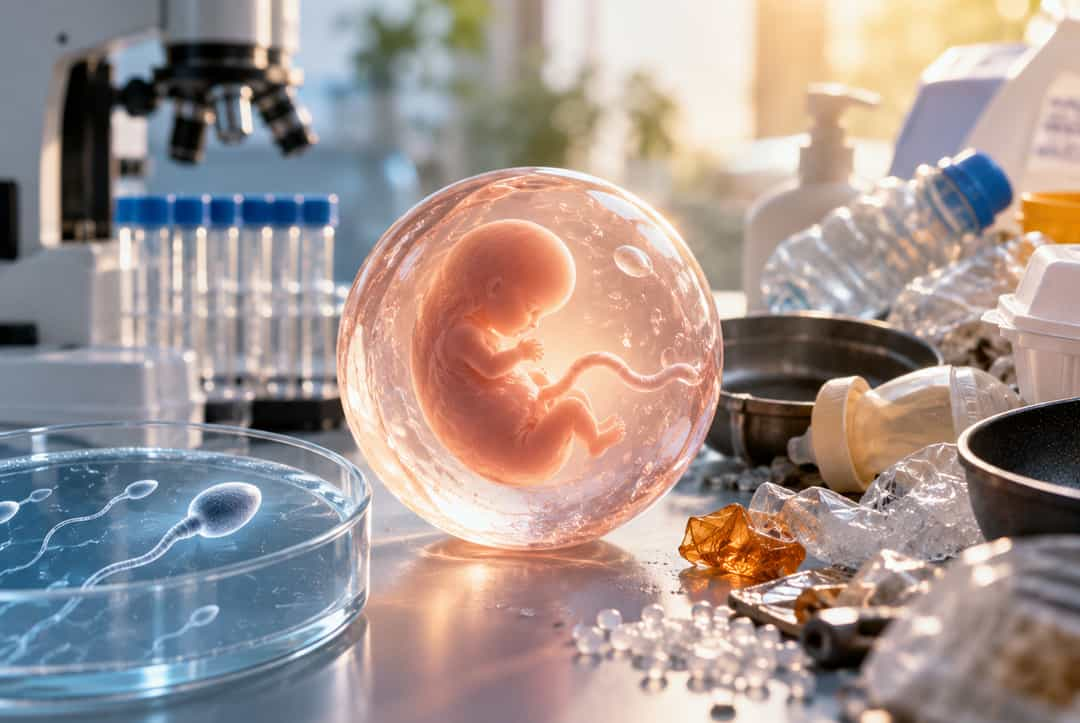
Male Fertility Has Been Declining for 50 Years: What Really Affects a Successful Pregnancy May Be Hidden in Everyday Life
Male Fertility Has Been Declining for 50 Years: What Really Affects a Healthy Pregnancy May Be Hidden in Everyday Life
More and more people are finding that getting pregnant seems to be becoming harder than it used to be.
In the past, when people talked about the global decline in fertility rates, they often first thought of later marriage and later childbearing, rising living costs, parenting pressure, and changing attitudes toward childbearing. But in recent years, more research has begun to focus on another issue that is easy to overlook: apart from “not wanting to have children,” is human fertility itself also changing?
Related research suggests that while social factors are certainly important, changes in natural fertility are also worth attention. This is especially true for families who are trying to conceive, considering IVF, or planning to seek more fertility options through Thailand third-generation IVF, overseas fertility treatment, or cross-border childbirth. Understanding one’s reproductive health status in advance may be more important than focusing on age alone.
Behind the Decline in Fertility Rates: It May Not Just Be That “Young People Don’t Want Children”
Research data show that the global total fertility rate has declined significantly over the past few decades. At the same time, researchers have proposed an observational indicator called the “composite natural pregnancy rate (CUPR)” to assess pregnancies achieved without assisted reproductive technology.
Large-scale Danish population registry data have revealed a phenomenon worth noting: across different birth cohorts, the number of natural pregnancies has trended downward, while the proportion of pregnancies achieved through assisted reproductive technology has increased markedly. Male fertility has been declining for 50 years, lowering embryo quality and conception rates. The “culprit” is you…
This cannot be simply understood as “modern people already find it very difficult to conceive naturally,” but it reminds us that when discussing fertility rates, in addition to social choices, we also need to pay attention to changes that may be occurring in humans’ underlying fertility itself.
Declining Male Fertility Is Becoming an Increasingly Important Part
Fertility has never been a woman’s issue alone.
Over the past 50 years, multiple studies have continued to examine the global trend of declining sperm concentration and total sperm count, and this change is not limited to one country or region. Changes in male sperm quality may also coexist with factors such as testicular development, reproductive system diseases, and environmental exposure. Male fertility has been declining for 50 years, lowering embryo quality and conception rates. The “culprit” is you…
For couples preparing for natural conception or entering an IVF cycle, male testing therefore should not stop at a basic semen analysis. If there are abnormalities in sperm concentration, motility, morphology, etc., doctors may further evaluate relevant indicators based on the specific situation.
Because in assisted reproduction, the final outcome is not simply a question of “whether the woman has enough eggs.” Sperm and eggs jointly participate in fertilization and embryo formation, so both partners need to be included in an overall fertility assessment.
Female Fertility Is Also Affected by Many Factors Beyond Age
On the female side, age remains an important factor affecting ovarian reserve and egg quality, but it is not the only variable.
Polycystic ovary syndrome (PCOS), endometriosis, uterine fibroids, and metabolic and endocrine problems may all affect ovulation, fertilization, embryo implantation, and pregnancy to varying degrees. Male fertility has been declining for 50 years, lowering embryo quality and conception rates. The “culprit” is you…
Therefore, for families preparing for overseas fertility treatment or planning Thailand third-generation IVF, the value of preliminary evaluation lies in identifying problems as early as possible. Combining information such as ovarian reserve, baseline hormones, ultrasound examination, and semen analysis often provides more useful reference than looking at a single indicator alone.
The Variable That Is Truly Easy to Overlook: EDCs You May Encounter Every Day
Researchers are particularly focused on a class of substances—endocrine-disrupting chemicals (EDCs).
These substances may interfere with the body’s normal hormonal signaling. Common sources of exposure include some plastic products, bisphenol A (BPA), phthalates, certain pesticides, flame retardants, and PFAS. Because the reproductive system is highly dependent on hormonal regulation, the relationship between long-term environmental exposure and reproductive health has long been a research priority. Male fertility has been declining for 50 years, lowering embryo quality and conception rates. The “culprit” is you…
It should be noted that current evidence cannot simply lead to the conclusion that “contact with a certain chemical will definitely cause infertility.” At this stage, it is difficult to prove that a single EDC directly causes infertility. A more reasonable understanding is that long-term, complex environmental exposure may be one of the factors affecting overall reproductive health. Male fertility has been declining for 50 years, lowering embryo quality and conception rates. The “culprit” is you…
What can be done in daily life is not to create anxiety, but to reduce unnecessary exposure as much as possible—for example, reducing long-term use of disposable plastic products, avoiding prolonged contact between hot foods and plastic containers not suitable for heating, and maintaining regular exercise, a reasonable diet, sleep, and weight management.
Rather Than Waiting Until You “Can’t Conceive,” It Is Better to Understand Your Fertility in Advance
Fertility is not a switch that suddenly flips from “normal” to “abnormal”; it is affected by age, genetics, lifestyle, metabolic status, reproductive system diseases, and environmental factors.
Therefore, if you already have a clear plan to have children—especially if you are older, have been trying to conceive for a long time, have a history of recurrent pregnancy failure, or are preparing for IVF, Thailand third-generation IVF, overseas fertility treatment, or cross-border childbirth—the more practical approach is to complete a basic fertility assessment for both partners as early as possible, and then formulate the next step based on the results.
For families who need to seek medical care in Thailand, Huanqiu Xinsheng can also provide overseas patient accompaniment services based on actual needs, including preliminary document organization, hospital and doctor appointments, itinerary coordination, translation and communication, and accompaniment during visits, helping families understand each medical step more clearly.
Final Thoughts
What is truly worth paying attention to is not only “whether we can still conceive now,” but whether we have paid attention to our fertility while there is still room for choice.
Modern assisted reproductive technology offers new possibilities for many families, but IVF is not a substitute for lifestyle and reproductive health management. Whether you ultimately choose natural conception or seek help through methods such as Thailand third-generation IVF, you should first understand your body, assess the issues, and then choose the path that truly suits you.
The best time to protect fertility is not after a problem is discovered, but starting now.
—— Huanqiu Xinsheng|Full-Cycle Fertility Management

- Previous
- Next