
Diminished Ovarian Reserve at 40 and Low Sperm Quality at 47: Thailand LRC IVF Achieves 2 High-Quality Blastocysts
Diminished Ovarian Reserve at 40 + Low Sperm Quality at 47: 2 High-Quality Blastocysts Obtained via IVF at Thailand’s LRC
For many families choosing IVF, age is an unavoidable consideration. Especially when a woman enters her 40s, ovarian reserve declines, the number of follicles decreases, and egg quality drops. Meanwhile, men may also face declining sperm motility and concentration with age. When both partners have fertility challenges, the assisted reproduction journey often becomes even more demanding.
Yet, in accompanying numerous families on their overseas fertility treatment and cross-border childbirth journeys, Huanqiu Xinsheng has always believed that as long as a professional medical team and a scientifically sound treatment plan are chosen, hope remains.
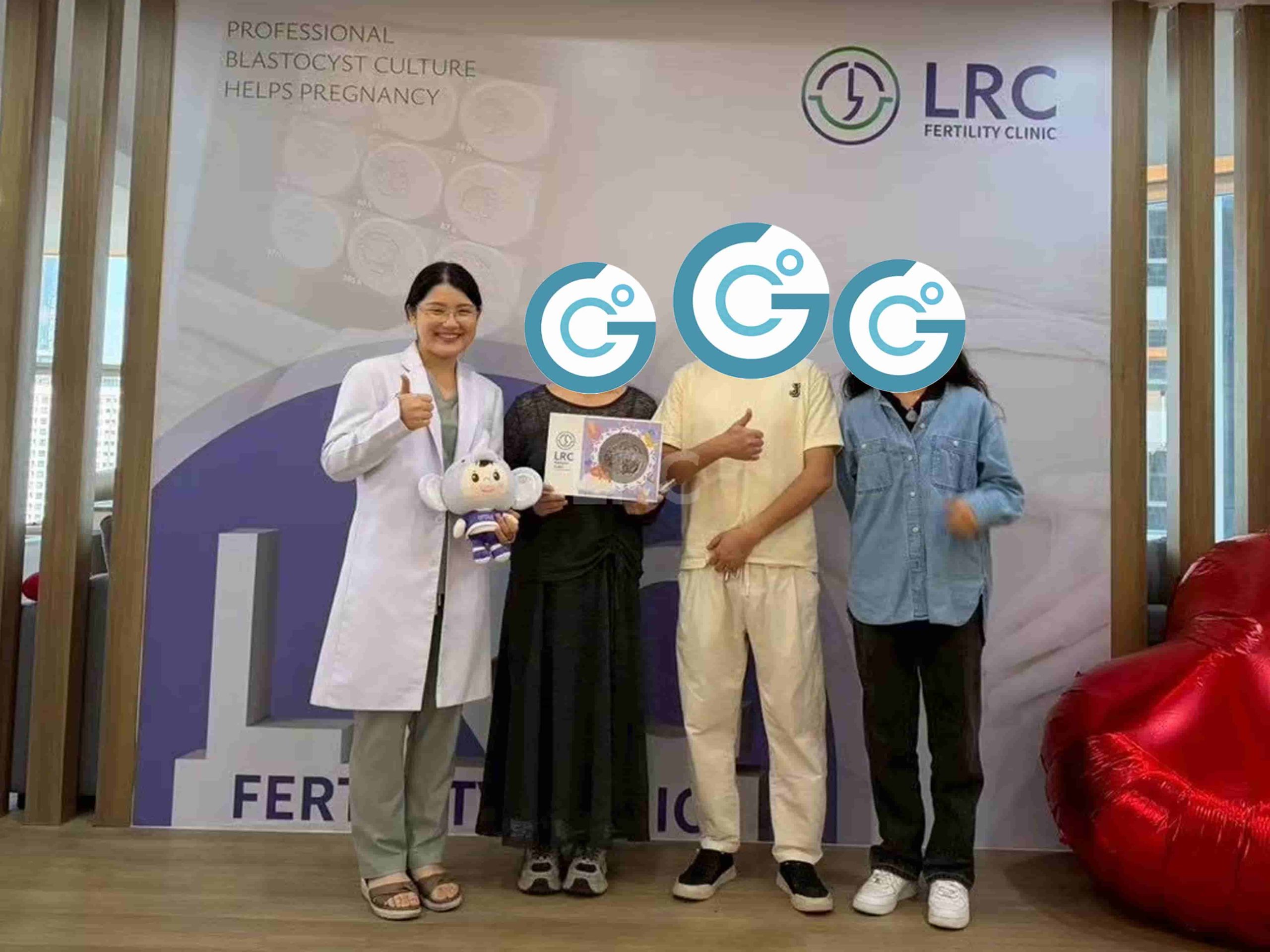
The client shared today is a real case who successfully completed third-generation IVF treatment at Thailand’s LRC Fertility Center and obtained high-quality blastocysts.
Client Background
Female Partner
- Age: 40
- Uneven follicle development
- Signs of left ovarian atrophy
- Long-term elevated FSH
- Diminished ovarian reserve
Male Partner
- Age: 47
- Low sperm motility
- Low sperm concentration
- Overall poor semen quality
From a medical perspective, this is a classic case of dual-factor infertility in an older couple. On one hand, the female’s diminished ovarian reserve limits the number of usable eggs; on the other hand, the male’s reduced sperm quality further affects fertilization rates and embryo quality.
After extensive research, the couple chose to seek professional help at Thailand’s LRC Fertility Center through Huanqiu Xinsheng’s overseas medical accompaniment service.
Why Choose Thailand’s LRC Fertility Center?
When selecting an overseas IVF hospital, the client focused on the center’s experience with older patients, laboratory capabilities, and ability to create personalized treatment plans.
LRC was ultimately chosen for the following reasons:
- Well-known assisted reproduction center in Thailand
- Extensive experience with IVF in older patients
- Established personalized ovarian stimulation protocols
- Advanced embryology laboratory
- Experienced team of embryologists
- Proven ICSI (intracytoplasmic sperm injection) technique
- PGT-A embryo chromosomal screening available
- Complete third-generation IVF treatment workflow in Thailand
For older couples, the laboratory’s quality often determines the final embryo culture outcome. LRC’s rich experience in blastocyst culture and embryo screening was a key factor in the client’s decision.
Personalized Ovarian Stimulation: Making the Most of Every Valuable Follicle
Given the client’s limited follicle count and diminished ovarian reserve, the LRC medical team did not use a standard stimulation protocol. Instead, they developed a tailored plan based on the client’s hormone levels and follicle development.
Throughout the stimulation cycle, the doctor dynamically adjusted medication dosages using ultrasound monitoring and hormone testing to observe follicle growth in real time.
Early stimulation: About 8 antral follicles were observed, with almost no dominant follicles in the left ovary. As treatment progressed, initially slow-growing follicles were gradually activated.
Late stimulation: The right ovary developed several mature follicles, and usable follicles also appeared in the left ovary, resulting in more synchronized follicle growth. For an older woman, every follicle counts, and precise monitoring with dynamic adjustment is key to improving egg retrieval efficiency.
Egg Retrieval and Fertilization Results Exceeded Expectations
Final egg retrieval results:
- 7 eggs retrieved
- 6 mature eggs (MII)
- 4 normally fertilized
Given the male partner’s low sperm motility and concentration, the laboratory used ICSI (intracytoplasmic sperm injection) to achieve fertilization. This technique directly selects high-quality sperm for injection into the oocyte, significantly reducing the impact of sperm quality on fertilization. For families dealing with male factor infertility, ICSI has become an important solution in IVF treatment.
Blastocyst Culture Yielded a Delightful Surprise
In IVF for older patients, blastocyst culture is often the most critical and challenging step. Many patients over 40 may experience failed blastocyst development even after successful egg retrieval.
In this case, the LRC laboratory delivered a delightful outcome:
- Normally fertilized embryos: 4
- Blastocysts obtained: 4
- Blastocyst formation rate: 100%
Achieving blastocyst development from all fertilized embryos reflects the technical strength of LRC’s embryology laboratory.
PGT-A Screening Results
After blastocyst culture, the client underwent PGT-A (preimplantation genetic testing for aneuploidy).
Final results:
- Blastocysts biopsied: 4
- Passed screening: 2
- 2 euploid (chromosomally normal) embryos obtained for transfer
For women over 40, the rate of chromosomal abnormalities in embryos increases significantly. PGT-A screening in third-generation IVF helps select healthy embryos with higher developmental potential, improving subsequent transfer efficiency.
Huanqiu Xinsheng’s Full-Service Overseas Medical Accompaniment
Throughout the overseas fertility journey, Huanqiu Xinsheng provided comprehensive cross-border childbirth services:
- Pre-treatment fertility assessment
- Hospital matching and appointment scheduling
- Treatment plan communication
- Medical document preparation
- In-person translation and accompaniment during medical visits in Thailand
- Coordination of tests and treatments
- Accommodation and daily living arrangements
- Follow-up during the transfer cycle
For many families undergoing IVF in Thailand for the first time, language barriers, unfamiliar processes, and living arrangements are major concerns. Professional overseas medical accompaniment not only saves significant time but also makes the entire treatment process smoother and more reassuring.
Case Summary
A 40-year-old woman with diminished ovarian reserve and a 47-year-old man with declining sperm quality — a seemingly difficult fertility challenge. However, through the combination of LRC’s personalized ovarian stimulation, advanced blastocyst culture, ICSI, and PGT-A screening, the client successfully obtained 2 high-quality euploid blastocysts.
This case once again demonstrates: Age does not necessarily mean lost opportunity.
For families considering IVF, third-generation IVF, overseas fertility treatment, or cross-border childbirth, assessing fertility early, choosing an experienced medical team, and developing a personalized treatment plan are often more important than simply waiting.
If you too are facing challenges such as advanced maternal age, declining ovarian function, repeated implantation failure, or male factor infertility, please feel free to contact Huanqiu Xinsheng. We provide professional one-on-one consultation and overseas medical accompaniment services to help you take a more informed and efficient path toward building your family.

- Previous
- Next