
Quitting Smoking and Drinking Not Enough? Study Finds These Everyday Exposures May Be Quietly Affecting Fertility
When asked “What affects fertility?”, many people give similar answers: smoking, drinking, staying up late for long periods, advancing age, excess weight, high stress... These are, of course, factors worth paying attention to when preparing for pregnancy.
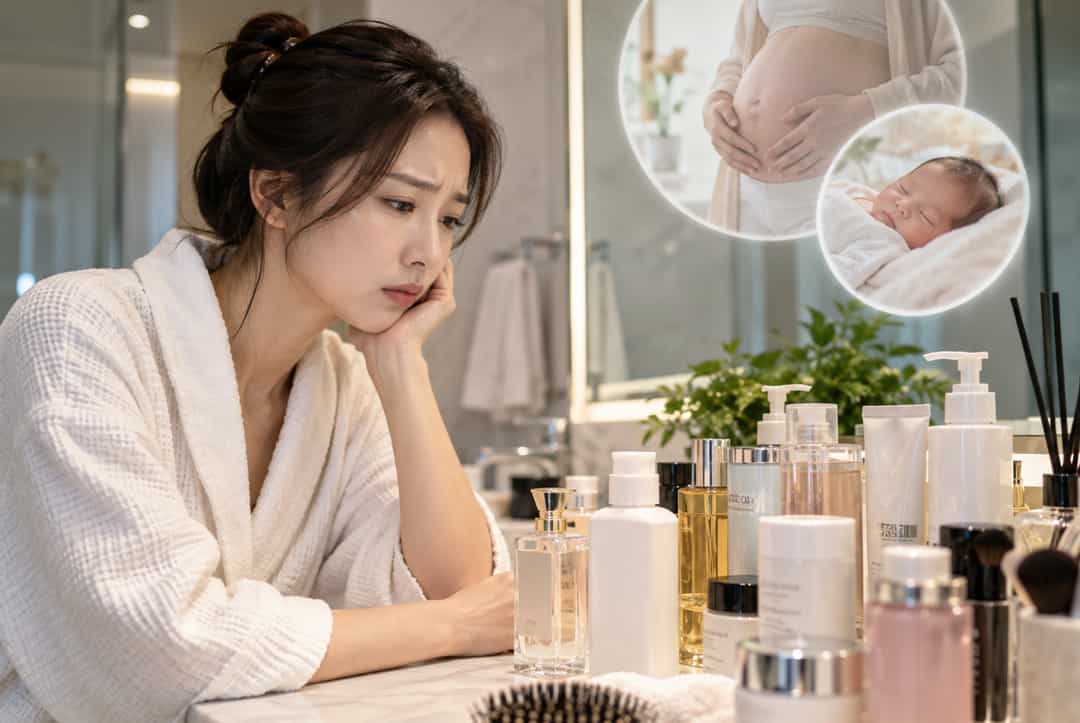
But there is another category of risk that is easily overlooked. It may not be in cigarette packs or wine glasses; instead, it may come into contact with our bodies every morning when we wash our faces, wash our hair, apply body lotion, or put on sunscreen. Shampoo, body wash, sunscreen, body lotion, perfume, skincare products, cleaning products... Why would these ordinary daily necessities be connected to reproductive health?
The core issue is not “using skincare products will cause infertility,” but a class of chemicals that has received increasing attention in reproductive health research in recent years: Endocrine Disrupting Chemicals, or EDCs.
For those who are trying to conceive naturally, preparing for IVF, or planning to seek services related to Thailand third-generation IVF overseas, understanding the relationship between environmental exposure and reproductive health is also an easily overlooked part of preconception health management. Today, Global New Life will explain this clearly based on existing research.
01|What truly warrants caution is not the word “cosmetics,” but endocrine-disrupting chemicals
To understand EDCs, we first need to clarify what the human endocrine system actually does. We can think of our endocrine system as a highly precise “human information network.” Organs such as the brain, pituitary, thyroid, ovaries, and testes continuously transmit information through different hormones.
In women, hormones are involved in follicle recruitment, follicular development, ovulation, the menstrual cycle, and changes in the endometrium; in men, hormones also participate in testicular function and spermatogenesis. In other words, the reproductive system does not operate on its own. Behind it is an entire precise hormonal regulatory mechanism.
The term endocrine-disrupting chemicals can be understood simply as exogenous substances that may interfere with the body’s normal endocrine signals. Commonly studied types include bisphenols, phthalates, parabens, and some benzophenone compounds. One important reason they have attracted attention in reproductive medicine research is that they may affect normal hormonal signaling through different mechanisms.
02|How exactly do they “interfere” with our bodies?
Hormones do not work on a “the more, the better” basis. In many cases, what really matters is: reaching the right place, at the right time, and at an appropriate concentration. It is like a key having to fit the corresponding lock to open a door. Some endocrine-disrupting chemicals may affect precisely this process.
First: mimicking human hormones
Some chemicals may exhibit activity similar to natural hormones in structure or effect. The body has not originally sent this instruction, but the presence of an exogenous substance may trigger a similar biological response.
Second: interfering with hormone-receptor binding
Other substances may affect normal signaling between natural hormones and their corresponding receptors. You can think of it as: the real “signal” has arrived, but the transmission process is disrupted.
Third: affecting hormone synthesis, transport, and metabolism
The effects of EDCs are not limited to hormone receptors. Some substances may also participate in or affect hormone synthesis, transport, metabolism, and clearance, thereby influencing the body’s finely tuned endocrine balance. The problem is that these substances do not exist only in laboratories or near chemical plants.
They may appear in plastics, food packaging, personal care products, cosmetics, cleaning products, and other consumer goods, and lead to daily exposure through diet, skin contact, inhalation, and other routes. Therefore, what truly deserves our attention is not a single occasional exposure, but: long-term, low-dose, multi-source combined exposure.
03|More noteworthy: What did researchers find in follicular fluid?
For women preparing for pregnancy, one place deserves particular attention—follicular fluid. Follicular fluid is an important microenvironment surrounding the developing oocyte. If we imagine the follicle as a small room where the egg grows, then follicular fluid is the “living environment” in that room. A Danish study recruited 111 couples and collected 155 follicular fluid samples for analysis. Researchers detected multiple benzophenones and phthalate-related metabolites in the samples.
What truly drew researchers’ attention was that statistical associations appeared between these exposure indicators and some reproductive outcomes. Study data showed that women with higher exposure levels of certain phthalate metabolites had relatively lower antral follicle counts. For example, in the study, the high-exposure groups for MiBP and MnBP had average antral follicle counts about 5.35 and 5.25 fewer, respectively, than the low-exposure groups.
For young women with good ovarian reserve, “a few follicles” may not sound very intuitive. But for those with low AMH, a small number of antral follicles, advanced age, or those who have already entered an IVF treatment cycle, every follicle that can be recruited and developed may have practical significance.
However, one scientific concept must be emphasized here: A study finding “correlation” cannot simply be understood as a certain skincare product directly causing a decrease in follicles. Age, lifestyle, underlying health status, other environmental exposures, and other variables may all affect reproductive outcomes. Therefore, the conclusion we should really draw is not “skincare products can no longer be used,” but rather: environmental chemical exposure may be one factor worth paying attention to in reproductive health management.
04|Not just women: men’s sperm also deserves attention
When many families talk about preparing for pregnancy, their first reaction is still: “How should the woman regulate her body?” But fertility has never been a woman’s responsibility alone.
In another study conducted by a research team from Anhui Medical University in collaboration with Jinan University, researchers measured 55 endocrine-disrupting chemical exposure indicators in the urine of 155 men and further analyzed the relationship between mixed exposure and semen quality.
The results showed that as the level of mixed exposure to related endocrine-disrupting chemicals increased, an association with a decrease in total sperm count was observed; in the data cited in the original article, indicators of progressively motile sperm also showed a notable decline, while semen volume did not show the same change.
This actually reminds many men preparing for pregnancy: “Semen volume appearing normal” does not equal “sperm quality necessarily being normal.” Clinical evaluation of male fertility needs to be based on a comprehensive assessment of multiple indicators, including semen volume, sperm concentration, total count, motility, progressive motility, and morphology. Especially for couples preparing for IVF, ICSI, or Thailand third-generation IVF treatment, the man’s lifestyle management cannot be ignored either.
In addition to quitting smoking, reducing excessive alcohol consumption, avoiding long-term high-temperature environments, maintaining reasonable sleep and rest, and controlling weight, reducing unnecessary environmental chemical exposure can also be part of lifestyle management.
05|You may think it is far from you, but you may be exposed every day
At this point, many people’s first reaction may be: “These chemicals sound like industrial pollution. How much can I come into contact with in ordinary life?” This is exactly where the issue deserves discussion.
A study conducted non-targeted chemical analysis on 113 common personal care products. The results showed: chemical substances not listed on the label were detected in 98% of the tested products; 85% of products had at least one unlabeled ingredient known or suspected to be harmful as defined in the study; 57.5% of products did not pass the safety evaluation used in the study due to issues such as unlisted contaminants. In addition, about 26% of products had actual test results that conflicted with some claims on the packaging.
Here, one concept that is easily misled by headlines especially needs to be corrected: “98% had unlabeled chemicals detected” ≠ “98% of products will harm fertility.” The former is a test result; the latter is a causal conclusion. The two cannot be equated. But what truly deserves attention in this study is that consumers may not be able to fully understand all the chemicals they are actually exposed to simply by relying on ingredient labels on packaging.
06|Are “natural,” “no additives,” and “fragrance-free” necessarily safe?
This may also be the misconception that many families preparing for pregnancy most easily fall into. Seeing “natural,” they think it is healthier; seeing “plant-based,” they think it is gentler; seeing “no additives,” they think it can be used with peace of mind. But from a toxicological perspective: natural does not automatically equal safe, and synthetic does not automatically equal dangerous. Whether something is safe needs to consider the specific substance, dose, exposure route, exposure duration, and the body’s actual absorption level.
The products involved include shampoo, hair care products, beard care products, sunscreen, lotions, moisturizers, essential oils, hand sanitizers, body wash, lip balm, toothpaste, mouthwash, and household cleaning products. Researchers did not only target so-called “cheap products.” On the contrary, they also selected some products that looked relatively good based on ingredient lists, then used non-targeted chemical analysis to detect chemicals in them and compared the results with packaging labels. Ultimately, a very interesting phenomenon was found: labels listed an average of about 16 ingredients, while instruments actually detected an average of 51 chemical substances.
So for those preparing for pregnancy, rather than obsessively researching every incomprehensible chemical name, it is better to establish a more realistic principle: reduce unnecessary exposure, rather than pursuing “zero chemicals.”
07|If you are preparing for IVF, should you throw away all your skincare products?
The answer is: absolutely not necessary. This is also something Global New Life particularly wants to remind everyone about. After seeing keywords such as “endocrine-disrupting chemicals,” “sperm decline,” and “follicle reduction,” the least recommended thing to do is go home and throw away all shampoo, skincare products, and body wash, then fall into another kind of extreme anxiety.
Preparing for pregnancy is not “sterile living.” The human body comes into contact with a large number of natural and synthetic chemicals every day, and what truly determines risk is often: what substance it is, the dose, how long the exposure lasts, the route by which it enters the body, and the individual’s own circumstances. Therefore, for couples preparing for natural pregnancy or preparing to enter an IVF cycle, some low-cost lifestyle adjustments can be adopted.
For example, try to reduce the simultaneous use of many personal care products with overlapping functions; appropriately cut back on products with particularly strong fragrances and long-lasting scent; minimize prolonged contact between food and unsuitable plastic containers; do not frequently heat plastic products that are not suitable for high temperatures; keep indoor spaces ventilated; and purchase daily necessities through proper channels with relatively transparent information.
The core of these measures is not to create fear, but: if you can reduce a little unnecessary exposure, reduce a little.
08|Why should “overall management” be emphasized even more before Thailand third-generation IVF?
Many families preparing to seek fertility care overseas, when consulting about Thailand third-generation IVF, care most about: What is the AMH level? How many antral follicles are there? What ovarian stimulation protocol will be used? How many eggs can be retrieved? How many blastocysts can be formed? What are the PGT results? These are, of course, important. But reproductive health never begins to be managed only after arriving at the hospital. Before entering an IVF cycle, both partners’ sleep, diet, weight, smoking and alcohol use, management of chronic diseases, sperm status, and living environment are all part of overall fertility management. Especially for families with advanced age, diminished ovarian reserve, suboptimal sperm quality, repeated failure, or those preparing for cross-border childbirth, there is even less need to focus all attention on a single supplement, a single skincare product, or a certain “miracle method.”
What is truly valuable is to do well, one by one, the factors that can be controlled. For those planning to travel to Thailand, in addition to physical preparation, there are also a series of practical matters such as organizing preliminary documents, hospital appointments, timing of travel to Thailand, ovarian stimulation cycles, language communication, transportation, and overseas medical accompaniment. This is also why Global New Life has consistently emphasized “full-cycle fertility management”: not placing hope in a single step, but making the entire process as clear and planned as possible.
09|The five things ordinary people can truly do
We cannot live in a world completely free of chemicals. Nor is it necessary to turn life into a “great chemical escape” for the sake of preparing for pregnancy. A more realistic approach is to make a few simple subtractions:
First, reduce unnecessary product layering.
Skincare and cleaning products should be sufficient; there is no need to layer a large number of products at the same time for so-called efficacy.
Second, appropriately reduce heavily fragranced products.
Perfume, fragrances, air fresheners, heavily fragranced cleaning products, etc., do not need to be used all day or at high frequency.
Third, use plastic products correctly.
Especially when high-temperature food is involved, pay attention to whether the container itself is suitable for heating and holding hot food.
Fourth, manage it together as a couple.
Preparing for pregnancy has never been a unilateral task for women. The man’s sperm quality, lifestyle habits, and environmental exposure also deserve attention.
Fifth, do not create excessive anxiety because of a single study.
EDCs deserve attention, but fertility is the result of a combination of factors including age, genetics, ovarian reserve, sperm quality, underlying diseases, lifestyle, and environmental factors.
Attributing a complex reproductive issue entirely to “shampoo,” “sunscreen,” or a certain chemical substance is likewise unscientific.
In closing: The real danger is not a particular bottle, but long-term exposure we never realize
Take another look at the sink and dressing table at home. Shampoo, body wash, body lotion, sunscreen, skincare products, perfume, cleaning agents... These things do not need to be demonized. But a growing body of research on endocrine-disrupting chemicals also reminds us: reproductive health is not only related to age, smoking, alcohol, and staying up late; environmental exposure is also a piece of the puzzle worth attention.
In the studies, multiple related chemicals and their metabolites were detected in follicular fluid; male studies also observed associations between mixed exposure and some sperm quality indicators; and testing of personal care products further suggests that packaging labels may not show all the chemicals actually present in a product. But scientifically understanding risk should not lead to panic.
For families preparing for pregnancy, undergoing IVF, or planning to travel to Thailand for Thailand third-generation IVF, overseas fertility care, or cross-border childbirth, what is truly worth doing is to include smoking and alcohol, sleep, diet, weight, exercise, environmental exposure, and both partners’ reproductive health in preconception management.
Less unnecessary exposure, more scientific preparation. Fertility is not a question whose outcome is determined by only one step.
From initial physical assessment to arrangements for the Thailand process, hospital communication, translation, and overseas medical accompaniment, what Global New Life hopes to do is help every family sort out the complex overseas fertility process step by step.
Global New Life|Focused on Thailand third-generation IVF and overseas fertility services
Full-cycle fertility management, so every step is prepared.
Health education note: This article is for health knowledge sharing and does not replace a doctor’s individualized diagnosis and treatment advice. Research on environmental chemicals and reproductive health is still ongoing, and some existing evidence consists of observational associations. It should not be simply understood as a single product or single ingredient necessarily causing infertility, miscarriage, or IVF failure.

- Previous
- Next